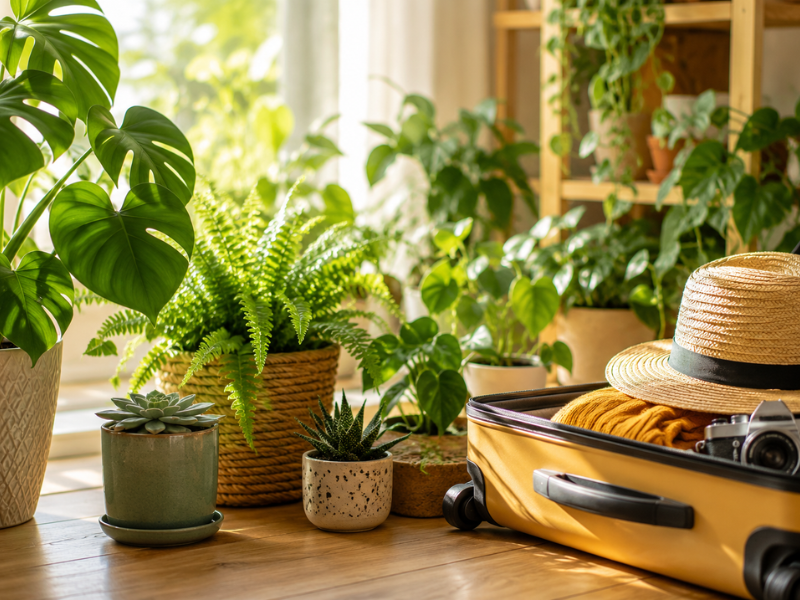
Heading off on vacation and worried about your plants? Discover the best homemade tricks and practical advice for keeping your plants alive while you’re away. Learn how to prepare them step by step before you leave and enjoy your trip with a clear conscience.
Have you ever felt that pang of guilt right as you zip up the suitcase, looking at your favorite plant like it’s saying goodbye forever? It’s happened to me more times than I can count. That moment when the plane takes off or the car pulls away and your mind, instead of planning routes, hotels, and beach days, stays home wondering whether your plants have enough water, whether the light in that room is right, or whether you’ll come back to a desert of dried-out pots.
Caring for our little urban jungle shouldn’t be a source of anxiety, it should be a pleasure. When vacation rolls around, though, our personal jungle seems to turn into a logistical puzzle that’s hard to solve. Today I want to share everything I’ve learned after years of experimenting, sometimes successfully and sometimes with a small disaster, about keeping our plants thriving while we take a well-earned break. We’re going to go through techniques, tricks, and the mindset you need so that when you get back, they greet you with new growth instead of dry leaves.
The images in this post were created with AI assistance for illustrative purposes
This post contains affiliate links. If you buy through them, you support my work at no extra cost to you
Getting Ready: The Art of Organizing Your Plants Before You Go
The key to traveling without worry doesn’t start the day you close the front door, it starts a week or two earlier. It’s essential to understand that our plants, just like us, need a gradual period of adjustment. You can’t simply leave them a bowl of water and expect them to survive ten days of intense heat with no strategy behind it. It all begins with taking a careful look at every corner of your home and at the specific needs of each plant living with you.
Assessing Each Species and Its Water Needs
The first thing to do is take a detailed inventory. Not every plant drinks the same or has the same metabolic needs. Some species, like cacti and succulents, will appreciate the time alone and prefer dry soil to avoid rot, while others, like ferns, peace lilies, calatheas, and pothos, are genuine drama queens that need constant moisture to keep from wilting within hours.
I’d strongly recommend spending an afternoon grouping them by water needs. The thirsty ones should sit together to create their own microclimate. Grouped together, the transpiration from one benefits the next, keeping the humidity around them more stable.
The tougher plants can stay right where they are without any complications while you’re enjoying your days away. This sorting exercise won’t only help with your vacation, it’ll also give you a much clearer picture of how to organize your space the rest of the year.
The Watering Technique to Use Before You Travel
A few days before you leave, make sure every plant has had a deep watering. That doesn’t mean flooding the pot completely, it means making sure the soil is thoroughly hydrated from the bottom up. If a plant has been dry for a long stretch, a deep soak is the best guarantee it’ll hold out a few extra days.
The ideal method is submerging the pot in a container of water for a few minutes until the soil takes up what it needs, then letting it drain thoroughly. This prepares the plant for a period of low resource availability, letting its tissues be fully turgid before your absence begins.
It’s a vital step you shouldn’t skip under any circumstances if you want them just as happy when you return. This is also the perfect moment to wipe the dust off the leaves, which improves their ability to photosynthesize even in lower light.
The Importance of Strategic Placement Before You Leave
Beyond watering, where you put your plants makes all the difference. If you usually keep them somewhere drafty or exposed to strong afternoon sun, it’s time to move them. Direct summer sun can dehydrate a plant in a matter of hours with nobody there to notice.
Move your plants to rooms where the light is indirect, filtered through light curtains or half-closed blinds. The temperature in those rooms tends to be cooler and steadier, which reduces how fast water evaporates from the soil. Avoid rooms that heat up badly, like south-facing ones with no shade protection.
By creating an environment of indirect light, we’re telling the plant it can slow its activity down, which is exactly what we want when we’re not around to look after it.
Homemade Self-Watering Methods: What Actually Works?
You’ve surely heard a thousand internet tricks for keeping plants alive during a trip. Some are very effective and others, honestly, can end in disaster if you don’t test them well ahead of time.
Let’s break down the methods that really make a difference, the ones I use every time I leave home to make sure nobody goes thirsty. The key here is customizing, since every plant reacts differently to a constant water supply.
The Wick Method With Cotton Cord
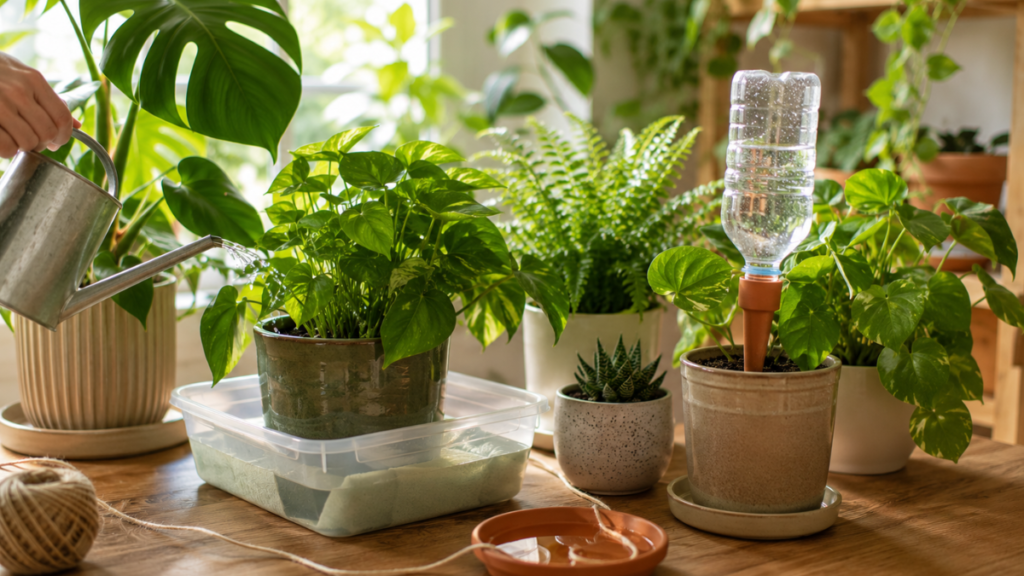
This is my favorite for how simple and effective it is. You need a container of water and a thick cotton or wool cord that can absorb and carry moisture. Put one end of the cord at the bottom of the water reservoir and bury the other an inch or two into the soil of the pot.
Through capillary action, the plant draws up the water it needs as the soil dries. It’s ideal for plants that can’t handle their soil going bone dry. If the reservoir sits higher than the pot, the flow stays steady and efficient for your whole trip.
I’d recommend testing this system for a few days before you leave, so you can gauge how much water your plant uses and size the reservoir accordingly. A pro trick is using glass containers so you can easily see how much water is left without having to disturb the setup.
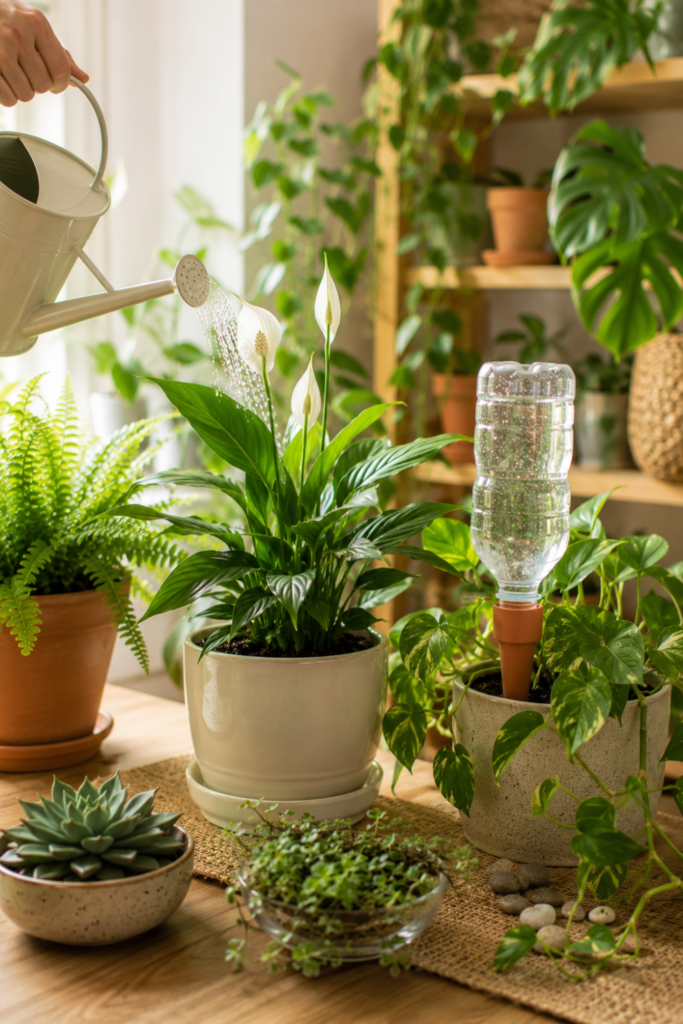
Ceramic or Terracotta Watering Spikes
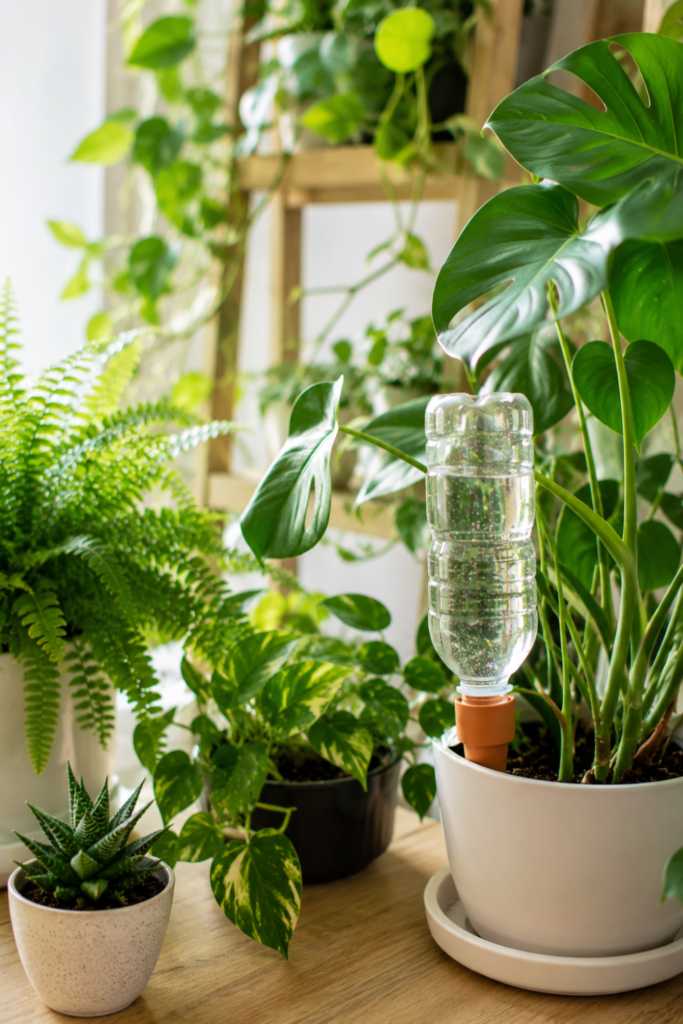
These are small spikes you push into the soil and connect to an upside-down water bottle. The porosity of the ceramic lets water seep through gradually. It’s a very controlled, clean system that avoids unwanted puddles on your furniture.
My advice is to install it a week before you leave to check that the flow is right, because sometimes if the soil is too compacted the water won’t come out, and if it’s too loose the bottle empties all at once. It’s a small investment that buys a lot of peace of mind knowing the supply is covered.
The nice thing about these spikes is that they fit almost any bottle size, which lets you choose the water volume based on how many days you’ll be gone. It’s an attractive, functional solution that needs no electricity or batteries.
The Group Soak, or the Bathtub Method
If you have a lot of small plants, this method is foolproof. Fill the bathtub or the sink with an inch or two of water. Put an old towel on the bottom to protect the finish and set your pots on top. The plants will draw water up through the drainage holes at their own pace.
It’s an excellent method for trips of one or two weeks, though remember that not every plant tolerates sitting in water that long, so use it only with the ones that truly love moisture. One practical note: standing water indoors for two weeks can attract fungus gnats or mosquitoes, so keep the level shallow and the room ventilated. You can also cover the whole setup with a lightly perforated clear bag to create a greenhouse effect if the air is very dry.
That helps keep humidity high, which benefits even plants that don’t need constant water at the roots. The towel acts as a moisture reserve that releases water slowly, creating a tropical atmosphere that makes your plants feel like they’re back in their natural habitat.
Water Crystals and Specialty Potting Mixes
If you’d rather not deal with cords or bottles, water-retaining crystals are an interesting alternative. They’re small polymer beads that absorb a large amount of water and release it slowly into the soil. You can mix them into the soil before you leave, though that takes a bit more prep work.
There are also specialty mixes that hold more moisture, ideal for plants that are always asking for water. What I like about this method is that it’s completely invisible, so it doesn’t change how your home looks. That said, remember that not every plant enjoys constantly damp conditions, so do your research before applying it. Some succulents could suffer if the crystals keep the soil too wet, so use them with judgment.
Adjusting the Environment: Light and Temperature
We often focus so much on watering that we forget the environment plays a crucial role too. The combination of direct sun and high temperatures can turn a pleasant room into a deadly oven for your houseplants. Managing the microclimate in your home is almost as important as giving them water, especially in summer, when evaporation speeds up dramatically.
Managing Light While You’re Away
If you’re traveling in summer or during a stretch of intense light, direct sun becomes your worst enemy. Sunlight coming straight through the windows can dehydrate your plants within hours. My personal trick is moving the plants a little away from the windows without leaving them in total darkness.
Drawing the curtains partway or lowering the shades partially creates a lovely filtered light that keeps your plants from taking an unnecessary heat hit. Indirect light is enough to keep them going without speeding up their dehydration.
It’s much better for them to spend a few days in dim light than to have their leaves scorched by prolonged exposure to intense midday sun, which would leave permanent marks and water stress that’s hard to recover from.
Keeping the Temperature Steady at Home
Close the blinds in the rooms you won’t be using to keep the house cool and avoid a greenhouse effect. Humidity matters here too, since a plant that isn’t dealing with temperature extremes uses far less water.
If you live somewhere very dry, grouping your plants is the best way for them to maintain healthy humidity around themselves, since they transpire and benefit from one another. This homemade greenhouse effect is powerful for getting through the hottest days of summer without leaves going crispy and browning at the tips.
Also avoid leaving plants near heat sources, like electronics that run warm, or in drafts that dry out the air artificially while you’re gone.
Should You Ask Someone for Help? How to Do It Without the Stress
Sometimes there’s no way around asking a neighbor or a friend to stop by and water. Let’s be realistic, though: nobody is going to care for your plants with the same attention you do. The secret to making this work is making it extremely easy for them, so it doesn’t feel like a heavy burden or a stressful responsibility while you’re off enjoying your days.
Create a Simple, Direct Set of Instructions
Don’t leave complicated notes full of jargon nobody else will understand. Group the plants that genuinely need watering in one spot and leave a clear sticky note with basic instructions: “water these, but only if the soil feels dry to the touch.”
If you have very delicate plants that need special care, it’s better not to delegate them if you can avoid it. Put them somewhere they won’t need much attention for a few days and trust the process.
The simpler the task, the better the outcome. You can even leave the watering cans filled and ready somewhere accessible, so the person doesn’t have to go hunting through your kitchen cabinets.
Eliminate the Risk of Overwatering
The biggest danger when you leave someone in charge isn’t that they’ll forget to water, it’s that they’ll water too much out of enthusiasm. Most houseplants die from too much water long before they die from drought.
I always say that when in doubt, don’t water. Make sure whoever comes by knows that excess water is fatal and that it’s better to find a slightly droopy plant than one with roots rotting from lack of air.
Knowing they won’t drown your plants is an enormous relief for any plant lover heading out on vacation. Always thank them, because it’s a genuinely generous gesture for someone to spend their time looking after your living things.
What to Do When You Get Back: The Readjustment Process
The reunion is a wonderful moment, almost like seeing old friends who waited patiently for you. Walking back into the house after days away, though, the natural impulse is to water everything immediately. I’m asking you to hold off.
When you get home, don’t go running around watering like a maniac. Take your time to observe calmly before doing anything, because your home’s environment changed while you were gone and the plants settled into their own survival rhythm.
A Visual Inspection on Arrival
Check each plant individually. Look for dry or yellowing leaves you can gently remove, so the plant doesn’t waste energy trying to save tissue that has already finished its cycle. If one is badly dehydrated, don’t flood it all at once. Give it a moderate watering and watch how it responds over the next few hours.
It’s as if the plant were waking up slowly from a long, deep sleep. Check also whether any pest took advantage of your absence to move in, since water stress can leave plants more vulnerable to small invaders like spider mites or aphids. A careful inspection now will save you plenty of headaches later.
The Importance of Patience During Recovery
Your plants have been in survival mode, or at least low-consumption mode, while you were gone. Don’t move them into direct sun right after you arrive and don’t hit them with fertilizer. Feeding a plant that’s coming off a stressful period can burn roots that are still finding their balance.
Let them acclimate to your home’s usual rhythm for a few days before going back to your intensive care routine. Gradual recovery is far more effective than a shock of drastic care that could do more damage after they’ve adapted to your absence. Treat them gently, give them soft light the first few days, and make sure drainage is back to normal.
Frequently Asked Questions About Caring for Plants While on Vacation
How long can a plant go without water?
It depends enormously on the species, the room temperature, the humidity, and the size of the pot. In general, a houseplant that’s well hydrated before you leave can comfortably last ten to fourteen days. If you’re gone longer, self-watering systems like a wick or ceramic spikes become essential for avoiding nasty surprises. Larger plants have more buffer, so they usually hold out better than ones in small pots that dry out fast.
What if I come back to a plant with yellow leaves?
That’s the most common symptom of water stress. If it’s a single yellow leaf, don’t worry, it can be part of the plant’s natural cycle, since with less water it chose to sacrifice the least vital part. If several leaves are yellow, check whether the soil is far too dry or whether water has been sitting in the saucer instead. Careful observation is your best tool for correcting course. Sometimes just moving it somewhere brighter or adjusting the watering brings it back surprisingly well.
Should I fertilize my plants right before I leave?
No, absolutely not. Fertilizer stimulates growth and new shoots. If the plant gets fed, it will want to grow, which means it will need far more resources and more water than it has available while you’re gone. Save the fertilizer for when you’re back and everything has returned to normal. It’s better for them to stay in a resting phase while you’re away.
Is it better to leave plants at home or take them somewhere else?
It’s always better to leave them at home in their usual environment. A change of location, light, and temperature usually creates far more stress for a plant than a few days without water. Keep their surroundings as stable as possible so they don’t face sudden changes. Only for extremely long absences, on the order of months, would it be worth considering a plant-sitting service or leaving them with someone you trust.
How do I know if my plant is one of the thirsty ones?
Look at its leaves. Plants with thin, tender, large leaves usually need much more water than ones with thick, fleshy, or leathery leaves. Leaves with a lot of surface area transpire quickly, while thick ones store water. If you look up your plant’s name, you’ll find specific information that helps you tailor watering to its exact nature. Learning to read what your plants are telling you is how you become an expert at indoor gardening.
Enjoy Your Trip Guilt-Free
At the end of the day, our plants are adaptable, resilient living things. Don’t let the fear of one dry leaf keep you from enjoying your vacation. Life is about balancing the care we give with our own need to explore and rest.
With these small adjustments, your plants will be in the best hands possible: yours, having prepared everything with care and foresight. I hope this guide helps you picture your next vacation as a period of rest for both you and your home.
What about you? What tricks do you use to keep your jungle alive while you’re away? Have you tried any of these methods, or do you have a foolproof secret that always works?
I’d love to hear about your experience, because in the end, learning from each other’s mistakes and wins is what makes this such a warm little community. Leave a comment below, share your photos, or ask any question you still have. I’ll be glad to read you and talk about our favorite plants.