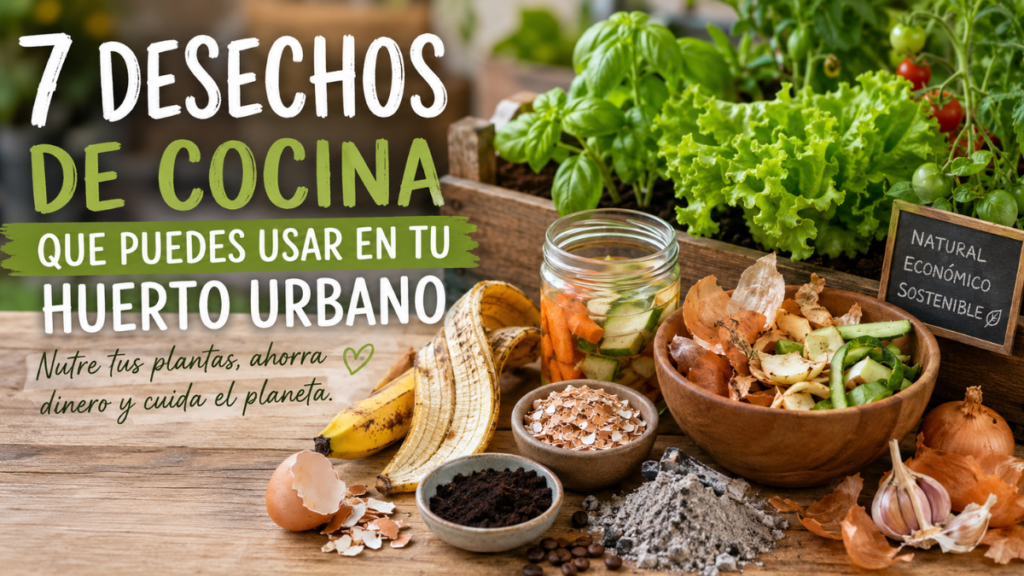
Discover 7 kitchen scraps you can reuse in your urban garden to feed your plants naturally, save money, and build a more sustainable space. Learn how to use them, how to store them, and how to get everything out of them.
There’s something special about discovering that many of the things that end up in the trash every day still have a second life in them. For a long time I threw out peels, vegetable scraps, and coffee grounds without giving it much thought. It seemed like the normal thing to do. What’s funny is that when I got interested in urban gardening, I realized that a good part of that waste was full of nutrients my plants could put to use.
Little by little, you start to understand that you don’t have to keep spending on fertilizer to keep a garden beautiful and healthy. A lot of the time, the best resources are already at home and you just have to learn to use them well.
Besides being a more sustainable way to grow, reusing organic waste creates a different connection with your garden. Everything becomes more deliberate. You start making better use of what you have, you generate less trash, and you notice how the plants respond in a far more natural way.
One of the things I love most about this process is watching how something as simple as an eggshell, or a bit of cooking water, can end up helping plants grow stronger, greener, and more alive. You don’t have to overcomplicate it to get started. Small changes already make a noticeable difference.
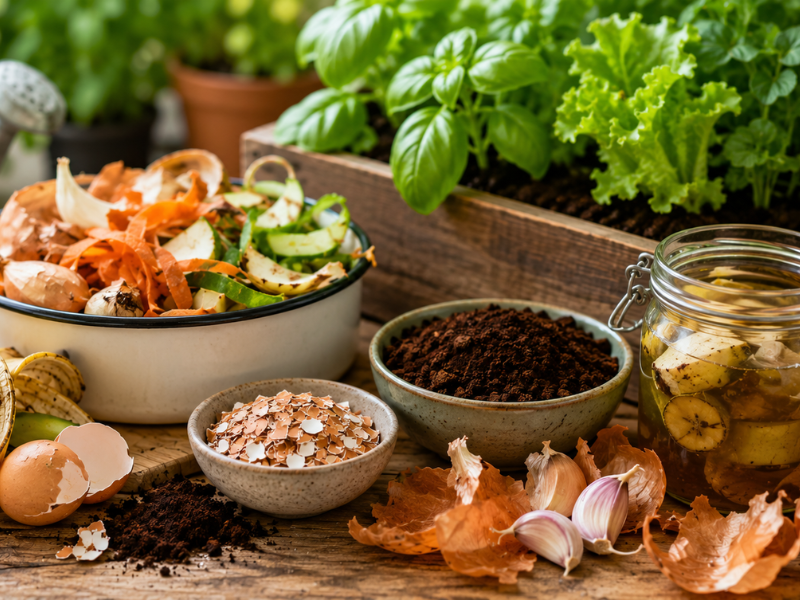
The images in this post were created with AI assistance for illustrative purposes
This post contains affiliate links. If you buy through them, you support my work at no extra cost to you
When you start growing your own plants, even on a small balcony or in a few pots by the window, you quickly realize how many nutrients the soil needs to stay alive and balanced. The problem is that we often look for solutions outside the house without noticing that we already generate very valuable resources here every day.
Organic waste contains minerals, organic matter, and nutrients that can seriously enrich your potting mix. Reusing it helps the soil hold moisture better, encourages beneficial microorganisms, and delivers nutrients in a far more gradual, natural way.
There’s a practical side worth mentioning too. An urban garden can mean constant spending if you always depend on commercial fertilizers. Reusing kitchen scraps cuts those costs considerably and makes growing much more self-sufficient.
Another important piece is reducing household waste. We’re not aware of the enormous amount of organic matter that ends up in the trash every week. Once you start reusing part of it in the garden, the amount of waste drops dramatically.
Best of all, plants usually respond well to this kind of natural care. The leaves look healthier, growth improves, and the soil stays far more balanced as time goes on.
| Kitchen scrap | Main nutrients | Benefits in the garden | How to use it | Cautions |
|---|---|---|---|---|
| Eggshells | Calcium, magnesium, minerals | Add calcium to the soil and support fruiting crops like tomatoes and peppers. | Wash, dry, grind, and mix into the soil or compost. | Don’t use large pieces, since they take a very long time to break down. |
| Coffee grounds | Nitrogen, phosphorus, potassium, organic matter | Improve soil structure and support leafy green growth. | Dry them and add small amounts to compost or soil. | Don’t overdo it, since they compact the mix and can trap too much moisture. |
| Banana peels | Potassium, phosphorus, magnesium | Support flowering and fruit production. | Dry and grind them, or steep them in water for watering. | Use in moderation to avoid excess potassium. |
| Vegetable cooking water | Minerals released during cooking | Feeds plants gently and puts a household resource to use. | Let it cool completely and use it to water. | Never use water with salt, oil, or seasoning. |
| Fruit and vegetable scraps | Organic matter and assorted nutrients | Ideal for homemade compost and enriching the soil. | Add to a compost bin or worm bin. | Avoid meat, dairy, and heavily processed leftovers. |
| Wood ash | Potassium, calcium, minerals | Supports flowering and adds minerals to the soil. | Sprinkle small amounts mixed into compost or soil. | Use only natural untreated wood ash, and never in excess. |
| Onion and garlic skins | Antioxidants and natural compounds | Help deter some pests and enrich compost. | Steep as a mild tea or add straight to the compost. | Don’t apply strong concentrations to the plants. |
1. Eggshells: Natural Calcium That Strengthens Plants
Eggshells are one of the simplest and most useful resources you can put to work in an urban garden. Plenty of people toss them automatically after cooking, with no idea they hold a good amount of calcium that plants can benefit from.
Calcium is essential for plant development, since it strengthens plant structure and helps prevent fairly common problems, especially in crops like tomatoes and peppers. One honest note here, because this scrap gets oversold online: blossom end rot in tomatoes is usually caused by irregular watering that prevents the plant from taking up the calcium already in the soil, not by a lack of calcium itself. Eggshells are a fine slow amendment, but steady watering is what actually prevents that problem.
At first I made the mistake of throwing whole shells straight into the pots, thinking that was enough. The trouble is that they take forever to break down if they aren’t prepared properly. Over time I learned that the best approach is washing them well, letting them dry completely, and grinding them almost to a powder.
The finer the particles, the easier it is for the soil to make those nutrients available. I often use a small blender or a mortar and pestle. Then I store the powder in a glass jar and use small amounts as I need them.
I mix them into the soil before planting, or sprinkle them lightly on the surface. They also work very well in compost, where they enrich the final blend considerably.
Something else I like is placing them around certain plants to make life harder for snails and slugs. It isn’t a miracle fix, but it does help keep them at bay a bit.
The plants that appreciate this most tend to be tomatoes, zucchini, and peppers. You notice it especially in the firmness of the fruit and the plant’s overall resilience.
2. Coffee Grounds: A Natural Fertilizer Full of Life
Coffee grounds are another household leftover that can become an incredible resource for your garden when used in moderation. A lot of people assume they’re only good for the trash, when in fact they contain nutrients that are genuinely useful for enriching soil.
They supply nitrogen, which leafy greens love, along with small amounts of phosphorus and potassium. They also help improve the structure of the mix and encourage beneficial microorganisms.
One of the first times I used coffee grounds in my pots I got too excited and added way too much. The result was not great. The soil compacted badly and some plants started holding excess moisture. Ever since, I’ve known that the point is to use small amounts.
Now I mix them into the soil or add them to the compost. I also like to dry them before storing, since damp grounds grow mold very easily.
Herbs tend to respond really well to this gentle nutrient boost. Basil and parsley, for example, grow far more vigorously when the soil has good organic matter in it.
Another nice benefit is that they slightly improve how the mix holds moisture, which comes in handy in summer when containers dry out so fast.
3. Banana Peels: The Secret to Spectacular Flowering
Banana peels are wonderful for flowering plants and for many fruiting crops. Since I started using them I’ve noticed a lot more vigor in some of my plants.
They contain a good amount of potassium, plus phosphorus and other important minerals. Potassium is essential for flowering, fruit production, and a plant’s overall resilience against stress or temperature swings.
There are several ways to use them. One of my favorites is drying and grinding them to mix into the soil. Sometimes I also make a kind of tea by leaving the peels in water for a day or two, then using that water for watering.
Plants usually react well to this natural boost. It shows up especially in tomatoes, strawberries, geraniums, and some herbs that flower constantly.
The important thing is not to overdo it. We assume the more fertilizer we add the better plants will grow, when in reality balance is what matters. Too many nutrients can produce exactly the opposite effect.
It also helps to cut the peels into small pieces if they’re going into compost, since they break down much faster that way and you avoid unnecessary soggy clumps.
4. Vegetable Cooking Water: Free Nutrition for Your Plants
For quite a while I poured vegetable cooking water down the drain without a second thought. Then I found out that water carries minerals released during cooking that your plants can absolutely use.
Water from potatoes, carrots, or green beans can become a small extra nutrient boost. It doesn’t work miracles, but it helps a fair amount when you do it regularly.
The critical part is that it must not contain salt. This one is non-negotiable. Salty water can seriously damage roots and throw off the balance of the mix, especially in small pots where salts build up much faster.
When I cook vegetables, I simply let the water cool and use it on some of my plants. I try to do it once or twice a week depending on how much I have.
Leafy greens tend to appreciate this kind of watering, since they get minerals in a gentle, natural form. It’s also an easy way to use a resource that would normally go straight down the drain.
5. Fruit and Vegetable Scraps: The Base of Good Homemade Compost
Homemade compost was probably the thing that most transformed how I understand urban gardening. Once you see how organic waste turns into fertile soil, you start looking at kitchen scraps in a completely different way.
So many everyday things can become compost. Vegetable trimmings, peels, overripe fruit, dry leaves, tea bags, and small plant scraps all help create a rich mix for your plants.
Compost dramatically improves soil structure, increases moisture retention, and releases nutrients slowly. That gradual release is exactly why it works so well.
A lot of people think composting at home requires a huge yard, but that isn’t true. There are small compost bins that are perfect for apartments and balconies. Even a worm bin can work great in a small space.
That said, there are certain scraps I prefer to avoid, especially meat, dairy, and heavily processed food. They tend to smell bad and attract insects, which isn’t practical in a small urban garden.
One of the loveliest things about composting is watching everything turn back into life. What looked like trash ends up as dark, nutrient-rich soil that plants genuinely thrive on.
6. Wood Ash: A Powerful Mineral Boost for Your Garden
Wood ash can be a very interesting way to enrich soil, though this one calls for more care because it’s fairly potent. Used correctly it supplies valuable minerals and helps strengthen certain plants, but overdo it and you can throw the soil badly out of balance.
For a long time I didn’t dare use it because I’d read wildly different opinions. After testing it slowly, I understood that the secret is moderation. A small amount contributes a lot without saturating the soil.
Natural ash mainly contains potassium and calcium, two nutrients that matter a great deal for flowers and fruit. It also helps correct soils that are too acidic, which is precisely why it shouldn’t be applied without care.
I only use ash from natural untreated wood. That matters, because varnished or chemically treated wood can contain substances that harm plants. Charcoal briquette residue and ash from printed paper are also off the table.
I usually sprinkle a very small amount mixed with compost or straight onto the soil, then water lightly so it works into the mix. A little goes a long way here.
The plants that appreciate it most are tomatoes, roses, peppers, and some flowering plants. You notice it especially when they need an extra boost during flowering season.
Something I learned over time is that there’s no need to obsess over adding nutrients constantly. Often the soil only needs small natural supports to stay balanced and healthy.
7. Onion and Garlic Skins: Natural Protection and Nutrients
Onion and garlic skins are one of those resources that go completely unnoticed in the kitchen and that can be genuinely useful in the garden. I like them especially because, besides adding organic matter, they help protect plants a little against certain pests.
They won’t replace a full treatment if you have a serious infestation, but they do help create a more balanced environment that’s less appealing to some insects.
The skins contain natural compounds with interesting properties, and they enrich compost nicely. I often add them right in with other organic scraps to improve the mix.
Another method I use often is making a mild tea. I simply boil water, add the skins, and let the mixture sit until it cools. Then I strain it and either mist it lightly on some plants or use it for watering.
What I like best about this method is how simple it is and how it costs practically nothing. Bit by bit you discover that most natural solutions for an urban garden are far simpler than they seem.
It’s also true that these remedies work better when the garden is balanced overall. A healthy, well-fed plant in living soil handles the usual problems far better.
How to Store Kitchen Scraps Properly for Your Garden
This part matters far more than it seems. Once you start reusing organic waste at home, you quickly find out that poor storage can create damp, bad smells, or even small fungus gnat problems.
At first I piled up scraps with no real system and it got pretty unpleasant. Over time I found much more practical ways to organize everything.
Dry scraps are the easiest to store. Ground eggshells, dried coffee grounds, or dehydrated banana peels keep perfectly in glass jars or airtight containers for quite a while.
I always make sure they’re completely dry before storing, because any leftover moisture can grow mold fast.
Wet scraps need a bit more attention. If I’m not going to use them right away, I’d rather freeze them temporarily or take them straight to the compost. Freezing organic scraps was one of those simple tricks that solved my summer odor problem entirely.
It also helps a lot not to accumulate too much in a small space. In an urban garden it’s best to keep the system simple and manageable so the whole process stays comfortable and pleasant.
One more important thing is cleaning your containers regularly. Even though we’re working with natural waste, it’s still organic matter and it needs a certain level of hygiene to avoid problems.
Common Mistakes When Reusing Organic Waste on Plants
When you start using kitchen scraps in your garden, making some mistakes is completely normal. Almost all of us go through that enthusiastic phase where we want to use absolutely everything without being clear yet on how.
One of the most common errors is using too much. We assume that if something is natural it can’t do harm, when the reality is that an excess of nutrients can throw the soil completely out of balance.
Coffee is a good example. In small amounts it works great, but cover the whole surface of a pot with wet grounds and the soil can compact badly, bringing fungus or trapped moisture.
Another fairly common mistake is applying organic scraps directly to the soil with no preparation at all. Some waste needs to break down first, or at least dry out a bit, before plants can make use of it.
It’s also worth paying attention to smell. A healthy urban garden shouldn’t produce strong bad odors. When they show up, it usually signals excess moisture or organic matter that’s gone off.
The key is observation. Plants show you how they’re reacting, and that teaches you enormously about what each one needs.
Which Plants Benefit Most From These Kitchen Scraps
Although almost every plant can use natural organic matter, some respond especially well to certain kitchen scraps.
Tomatoes are probably the crop where I’ve noticed the biggest difference. They benefit a lot from the calcium in eggshells and the potassium in banana peels. When the soil is balanced, the plants grow stronger and the fruit tends to develop far better.
Strawberries also react well to gentle natural fertilizers. Compost and banana tea help considerably during flowering and fruiting.
Herbs deeply appreciate soil that’s rich in organic matter. Basil, mint, parsley, and chives usually grow more vigorously when the soil keeps good biological activity.
Leafy greens like spinach or lettuce make particularly good use of the gentle nitrogen in some organic waste, though always in moderate amounts.
The nicest part of this whole process is watching how each plant responds. Little by little you develop a certain intuition and start understanding much better what your garden needs at any given moment.
How to Start Reusing Kitchen Scraps If You Never Have Before
Plenty of people are drawn to the idea of reusing organic waste but don’t quite know where to begin. It can look complicated or overly technical, when in reality it can be very simple.
You don’t need a perfect system from day one. In fact, starting small is usually best, so you can understand how everything works without stress.
Eggshells and coffee grounds are usually an easy place to start. They’re everyday scraps, simple to prepare, and quite safe when used in moderation.
It can also be a good idea to run small tests in a single pot before applying anything to the whole garden. That way you can watch how the plants react and build confidence.
Patience matters too. Natural fertilizers tend to act more gradually than many commercial chemical products. That’s part of the advantage, since they feed the soil in a more balanced, sustainable way.
Over time you start noticing changes not only in the plants, but in how you relate to growing them. Everything becomes more deliberate and more connected to natural rhythms.
The Emotional Impact of Tending a Garden More Consciously
Although many people start an urban garden to have fresh herbs or grow a few vegetables, something much deeper ends up happening. Little by little, certain routines shift, and so does the way you look at a lot of everyday things.
Reusing kitchen scraps makes you more aware of everything you consume and waste. You start valuing resources, time, and natural processes more.
There’s also something deeply therapeutic about caring for plants. Watching them grow, preparing the soil, reusing waste, and seeing everything transform again creates a calm that’s hard to put into words.
In the middle of a fast-paced daily rhythm, the garden becomes a small refuge. A space where everything happens more slowly and where you reconnect with something much simpler and more real.
That’s exactly why reusing organic waste feels so satisfying. It isn’t only about saving money or recycling. It’s about taking an active part in a cycle where practically nothing goes to waste.
Frequently Asked Questions About Kitchen Scraps in the Garden
Are all kitchen scraps good for plants?
Not all organic waste is suitable for direct use in an urban garden. Some scraps can create bad smells, attract insects, or throw the soil badly out of balance. The safest approach is to use simple plant scraps and avoid heavily processed products, meat, and dairy.
Can I put cooked food scraps in my pots?
It usually isn’t a good idea, especially in small spaces. Cooked leftovers break down differently, produce more odor, and can attract pests easily. In an urban garden it’s far more practical to use fresh or dried plant waste.
How often should I apply natural fertilizers?
It depends a lot on the type of plant, the size of the pot, and the scrap you’re using. In general it’s better to apply small amounts regularly than to add a lot at once. Plants tend to respond better to gentle, consistent feeding.
Can coffee grounds harm plants?
In excess they can cause problems, especially if they pile up wet on the soil surface. Used in moderation they work very well and add a good amount of organic matter to the mix.
Do I need a compost bin to reuse organic waste?
Not necessarily. Many people start simply by reusing eggshells, cooking water, or small amounts of coffee grounds. A compost bin can be useful later on, but it isn’t essential to get going.
What do I do if mold appears on stored scraps?
The first thing to check is moisture. Mold usually shows up when the scraps aren’t fully dry or when there’s poor airflow. Remove the affected material and improve your storage setup.
Turning Waste Into Life Changes How You See Your Home
One of the loveliest things about reusing kitchen scraps in your garden is that you start finding value where you used to see only trash. Little by little, your relationship with your plants changes, and so does your relationship with your kitchen and even with how you shop.
Peels, vegetable trimmings, and coffee stop being simple waste and become part of something much bigger. Everything returns to the soil in some form and ends up transformed back into life.
There’s also enormous satisfaction in growing healthy plants using natural resources you already have at home. The process becomes far more sustainable, cheaper, and much more conscious.
Next time you brew a coffee or peel some vegetables, maybe you won’t look at those scraps the same way. You might start seeing them as a small chance to care for your plants more naturally.
Tell me in the comments which kitchen scraps you use in your garden, or which one you want to try first. Between all of us, new ideas and tricks are bound to turn up that help keep our plants full of life.