Watering your plants…Be honest. How many times have you walked up to your favorite plant with the best intentions, watered it like your life depended on it, and a few days later watched its leaves go limp, sad, or straight-up yellow? Or worse: you left for vacation, completely forgot about it, and came home to a scene that looked like a desert horror movie.
Take a breath. You’re not the only one this happens to, and you’re not destined to be a serial killer of cacti and ferns. Plant care is a skill, and most of it comes down to reading the gap between what they actually need and what we assume they need.
Plants are constantly telling you what they need. Sometimes the message is obvious, sometimes it’s subtle, and a lot of the time we miss it until it’s too late.
So grab a coffee (or tea, I don’t judge), because today we’re tackling one of the biggest mysteries in indoor gardening: the thin line between drowning your plants with love and leaving them bone-dry from neglect.
Images in this post were created for illustrative purposes.
Every plant runs on its own clock
You can’t force a plant to grow on your schedule. They have their own pace, their own strategy for surviving and adapting to your living room, which, let’s be real, is an artificial habitat for them.
When we step into their world, our only real tool is observation. There’s no magic calendar that works for every home. What works great for your neighbor’s monstera might drown yours, because your apartment is more humid or gets less light.
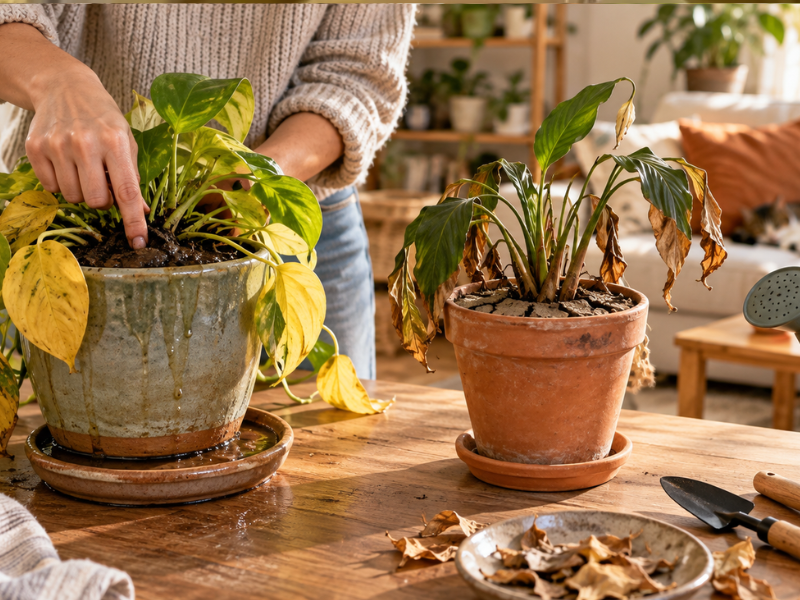
Before you reach for the watering can, just look. Touch the soil. Pay attention. Once you start doing that, you’ll realize that every dropping leaf and every new shoot is the plant responding directly to what you’re doing.
This post contains affiliate links. See our disclosure for details.
Overwatering vs. underwatering
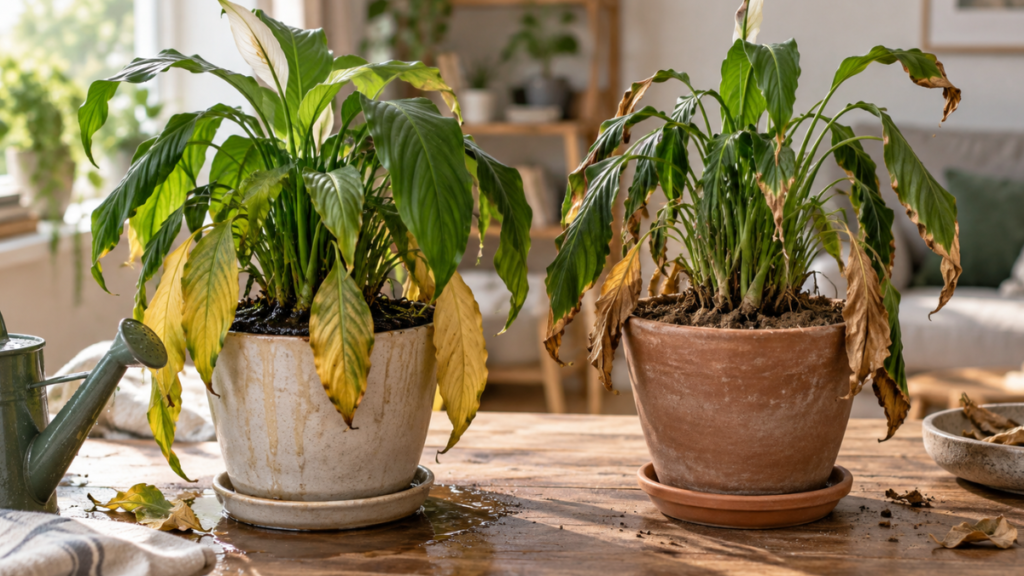
So why do we get watering so wrong? Because, weirdly enough, the symptoms of too much water and not enough water can look almost identical at first glance.
A crispy brown leaf could be the result of extreme drought or root rot that’s keeping water from reaching the rest of the plant.
Think of your plant’s roots as its lungs and its mouth at the same time. They need to drink, yes, but they also need to breathe oxygen.
When the soil stays soaked all the time, the tiny air pockets between soil particles fill up with stagnant water. The roots suffocate, die, and once they’re dead, they can’t absorb anything. Ironically, the plant dries out from the inside even though it’s sitting in a puddle.
On the flip side, when a plant goes too long without water, the soil compacts into a brick. If you pour water quickly, the liquid runs down the sides of the pot and drains out the bottom without ever soaking the root ball in the center. The plant stays thirsty and its cells collapse.
Signs you’re overwatering
Overwatering is hands down the number one killer of houseplants. We do it out of love. We think the more we water them, the happier they’ll be. But plants aren’t fish.
What the leaves are telling you
The first warning usually shows up in the foliage, but not always the way you’d expect. The lower, older leaves start turning yellow and fall off easily.
Unlike underwatering (which tends to leave leaves crispy), overwatering usually makes them soft, translucent, or even mushy.
Sometimes brown or black spots appear surrounded by a yellowish halo, which means fungus has moved in and is doing damage to the tissue.
How the stems feel
If you touch the base of the stems and they feel soft, mushy, or have a dark discoloration, that’s a bad sign. It means the rot has already started climbing from the roots upward.
The smell test
Put your nose close to the soil surface. If it smells like stagnant moisture, rotting earth, or a damp basement, you’ve got a serious overwatering and drainage problem. Healthy soil smells like a forest after rain. Never like decomposition.
Signs you’re underwatering
Now let’s talk drought. This one’s usually easier to catch because deep down you already know you haven’t touched the watering can in weeks.
Crispy, brittle leaves
Leaves lose their firmness, go dull, and take on a papery texture. The edges turn brown, get crunchy, and crumble when you touch them. If you rub a dried-out leaf between your fingers, it breaks apart like tissue paper.
Soil pulling away from the pot
Ever noticed a gap between the edge of the pot and the soil? That’s a classic sign of severe dehydration. The soil has lost all its moisture, shrunk down, and any water you pour will just run straight down the sides without soaking in.
Drooping and stunted growth
The plant looks frozen in time. New leaves come out tiny, misshapen, or dry up before they fully open. In survival mode, the plant stops spending energy on growth and channels everything it has into keeping its main stems alive.
How to check moisture before you water
Stop looking at just the surface. That’s the most common beginner mistake and the reason we keep getting it wrong. The top layer dries out in hours if it catches a ray of sun through the window or the heat is cranked up, but down at the bottom where it actually matters, it could still be a swamp.
The wooden skewer trick
Grab a wooden skewer, the regular kind you’d use for kebabs, and push it gently all the way to the bottom of the pot, being careful not to damage any major roots. Leave it in for five to ten seconds, then pull it out slowly. Does it come out clean, dry, with no soil sticking to it? Your plant genuinely needs water. Does it come out with dark, damp soil clinging to it, cool to the touch? Don’t even think about watering. Give it another couple of days.
The weight test
This one is foolproof once you get the feel for it. Lift the pot right after you’ve done a thorough watering (when it’s heavy), then lift it again a few days later when the soil has dried out.
Your hands will memorize the difference. Eventually, you’ll be able to tell in a second just by nudging the pot whether it needs a drink or not.
The finger test
Stick your index finger into the soil up to the second knuckle, about an inch or two deep. If it feels cool, damp, and some soil sticks to your finger, hold off. If it feels completely dry, warm, and loose, it’s time to water.
How to rescue an overwatered plant
If you’ve caught the warning signs too late and your plant is clearly showing symptoms of waterlogging and rot, there’s still hope. But you need to act fast.
- Carefully remove the plant from the pot: flip the pot gently, support the base of the stems with your other hand, and slide the root ball out.
- Inspect the roots closely: shake off the excess soil to see what’s going on underground. Healthy roots are firm, light-colored, white or cream. Rotted roots are brown, black, smell bad, and fall apart between your fingers like wet string.
- Emergency root pruning: with clean scissors or pruning shears dipped in rubbing alcohol, cut away all the rotted, dead, or damaged roots. If you leave sick tissue behind, the rot will keep spreading.
- Fresh potting mix, no exceptions: do not put it back in the same waterlogged soil. Toss the old mix and use fresh, lightweight potting soil with great drainage (a blend of peat, perlite, or coco coir works well).
- Hold off on watering: wait several days before watering the new soil. Give the pruned roots time to heal in a dry environment.
How to rescue a dehydrated plant
If the problem is the opposite and your plant is bone-dry, the rescue process takes some patience and a little technique because the soil has become hydrophobic.
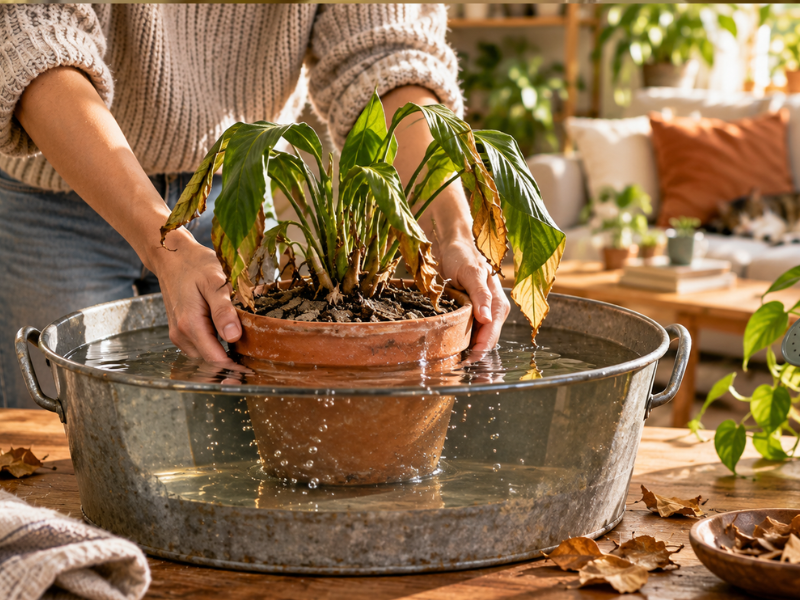
- Bottom soak in a basin: the soil is so dry it will literally repel water if you pour from the top. Forget the watering can. Fill a bucket or basin with room-temperature water and submerge the entire pot (up to the rim of the soil) for 15 to 30 minutes. You’ll see air bubbles rising to the surface. That’s a great sign because it means the water is finally reaching the center of the root ball.
- Drain completely: pull the pot out and let it drain in the sink until the dripping stops. Never leave excess water sitting in a saucer.
- Trim the dead leaves: any leaf that’s completely crispy, brown, and crumbling is not coming back. Cut it off with clean scissors so the plant stops wasting energy trying to keep dead tissue alive.
- Create a temporary humidity tent: if the dehydration was severe, drape a clear plastic bag loosely over the foliage for a couple of days. It acts like a mini greenhouse, holding in moisture while the roots recover.
What’s really happening underground
When we bring a beautiful plant home, we often leave it in the nursery pot or repot it with whatever cheap soil we find at the store.
Good potting mix isn’t just dirt. It’s doing two jobs at once: holding enough moisture for the roots to drink from, and keeping enough air space between the particles for them to breathe. That balance is everything.
When we consistently overwater, we destroy that balance. Water shoves out the oxygen, flooding every tiny air pocket and creating an anaerobic environment. The roots, which need constant oxygen to generate the cellular energy that keeps them alive, literally suffocate.
It’s the same feeling we’d have if someone held us underwater too long. Without air, root cells die, lose their structure, turn mushy and brown, and open the door for fungal pathogens that colonize the root system and spread the rot upward into the main stem.
On the other end, when chronic underwatering becomes the norm, the physical process is different but equally destructive.
Peat-based potting mixes, once they dry out completely, shrink and turn hydrophobic. They literally stop absorbing water.
If you grab a plant that’s been dry for weeks and pour water on it quickly, the liquid won’t penetrate. It just runs down the inside walls of the pot, comes out the drainage hole perfectly clean, and leaves the center of the root ball as dry as pumice.
Inside, the plant is dying of thirst even though you literally just watered it.
How your pot choice affects watering
Another common mistake is choosing the wrong container. We love those glazed ceramic pots with gorgeous designs, cement bowls with no holes, and wicker baskets lined with plastic that look straight out of a decor magazine.
But the pot material plays a huge role in how fast water evaporates and whether you’re headed for overwatering or underwatering.
Classic terracotta pots, for example, are porous. Their walls let water transpire and evaporate out through the sides, not just the top. Something like these terracotta pots work really well.
They’re a blessing for plants that hate sitting in moisture, like cacti, succulents, snake plants, and ZZ plants.
With terracotta, the soil dries more evenly and quickly. But if you put a fern, a calathea, or a fittonia in terracotta just because it looks nice, the soil will dry out at lightning speed. You’ll end up watering every other day and still risk drought from missing a round.
Plastic or resin pots, on the other hand, are completely non-porous. They lock moisture inside the root ball for much longer because water can only escape by evaporating from the top layer.
They’re great for keeping tropical plants happy, but a death trap if you put drought-loving species in them. The water takes twice as long to leave the deeper layers, dramatically increasing the risk of waterlogging and root suffocation.
What about those gorgeous decorative planters with no drainage hole at all? If you plant directly in one, you’re building a sealed pool with no exit.
The excess water from every watering session sits at the bottom, keeping the lowest roots permanently submerged.
The only safe way to use these decorative containers is as cachepots: put a simple plastic nursery pot with drainage holes inside, pull it out when it’s time to water, let it drain fully in the sink, and only put it back inside the decorative planter once it’s completely done dripping.
Where you put the plant changes how often you water it
Here’s a myth that kills a lot of plants: every pot in the house needs the same amount of water, no matter where it’s sitting.
We tend to fall into the habit of picking a fixed day (every Sunday morning, for example), grabbing the watering can, and making the rounds watering every pot equally.
That autopilot routine is the single biggest reason so many houseplants don’t make it. How much water a plant needs doesn’t depend on what day it is on the calendar. It depends on how much light it’s getting, the room temperature, and how fast it’s photosynthesizing.
Picture a monstera deliciosa sitting right next to a south-facing window, soaking up several hours of bright, indirect light every day.
In that sweet spot, the plant is running at full speed. It opens its stomata, pulls in CO2, converts light energy into food, and transpires water vapor through its leaves to regulate temperature. All of that burns through water and nutrients fast, and the soil dries out in just a few days.
Now take that same monstera and move it to a dark hallway corner, or a bedroom where natural light barely reaches. Its metabolism slams on the brakes. If you want more details on monstera care, check out this post.
Without enough light to drive photosynthesis, the plant stops actively drinking. If you keep watering on the same cheerful schedule you had when it was next to the bright window, the water will sit in the soil for weeks with nowhere to go.
The roots will suffocate fast, and the plant will start declining even though you’re giving it the same amount of love and the same amount of water as before.
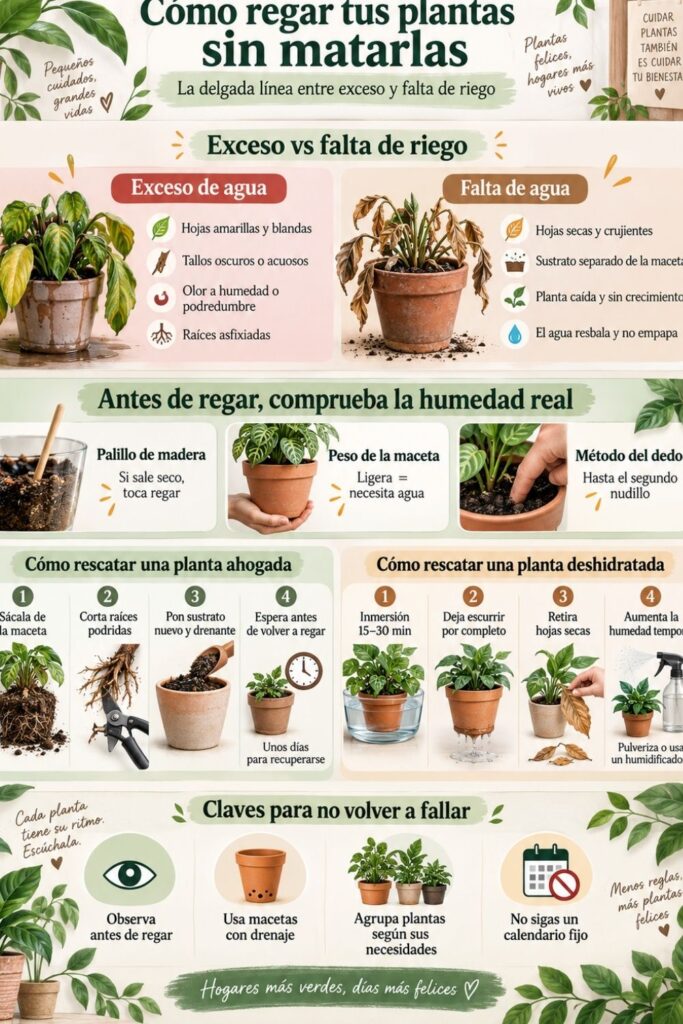
Houseplant watering guide infographic
Common questions about watering your plants
Is tap water fine, or should I let it sit first?
Depends on where you live. If your tap water is high in chlorine or minerals, letting it sit uncovered in a bottle for 24 hours helps the chlorine evaporate.
Mineral buildup won’t go away that easily, though. If you have sensitive plants like ferns or calatheas, switching to filtered or rainwater will make a noticeable difference in leaf health.
Do saucers under pots actually help?
They protect your furniture, but they’re a hazard if they turn into tiny pools. The golden rule: empty the saucer 10 to 15 minutes after watering. Standing water under a pot is a fast track to root rot.
Why are the leaf tips turning brown even though I’m watering correctly?
It could be several things beyond watering itself. A lot of houseplants struggle with low humidity, especially in winter when the heat is on or in summer when the AC is blasting.
It can also be excess mineral salts in the soil from over-fertilizing or consistently using hard water.
Should I water the same amount in summer and winter?
Absolutely not. In summer, heat and long daylight hours mean plants transpire more, water evaporates faster, and they need to drink more often.
In winter, most plants go dormant or slow way down, and their water intake drops dramatically. Watering in January the way you did in July is the fastest way to lose them.
Keeping your plants alive long-term
You don’t need superpowers or a natural green thumb to keep plants alive long-term. You just need a few good habits that fit your life.
Here are a few simple guidelines so watering never feels like a headache again:
- Get to know each plant: not all of them are equally thirsty. A cactus or succulent stores water in its tissues and would rather be dry than drenched. A fern or fittonia hates drying out completely. Group your plants by their water needs and you’ll make your life a lot easier.
- Always use pots with drainage holes: it sounds obvious, but we’ve all bought a gorgeous pot without drainage because it looked amazing. If you fall in love with one that has no hole, use it as a cachepot and put a simple nursery pot with drainage inside.
- Track your routine if you’re forgetful: there’s no shame in using a plant care app or sticking a note on the fridge. When you’re starting out, keeping a log helps you understand the natural rhythms of your home.
I’d love to hear how you handle watering at your place. Are you the type who forgets for weeks, or the overachiever who drowns everything with love?
Drop a comment below and share your biggest wins and your worst plant disasters. I read every one!