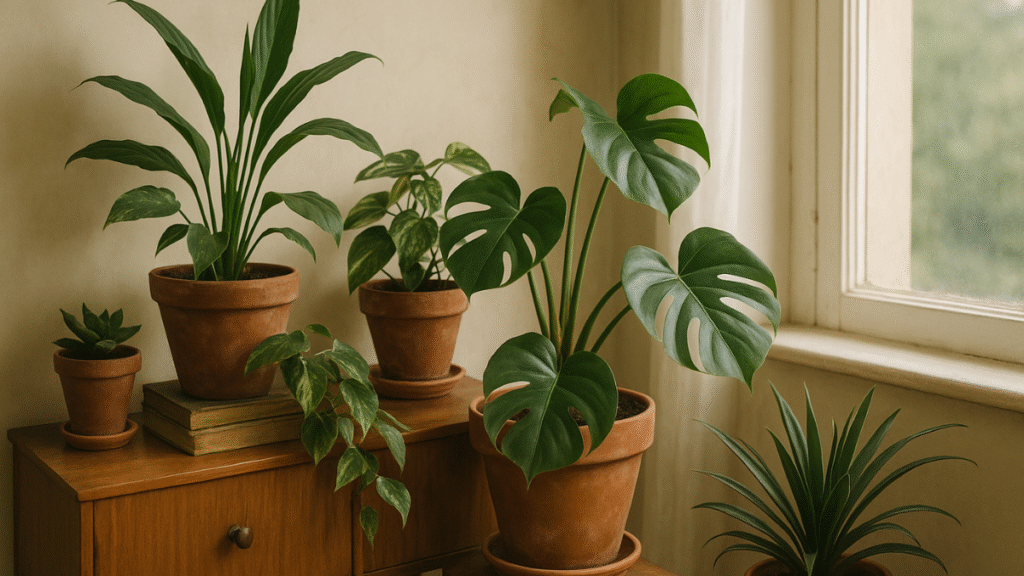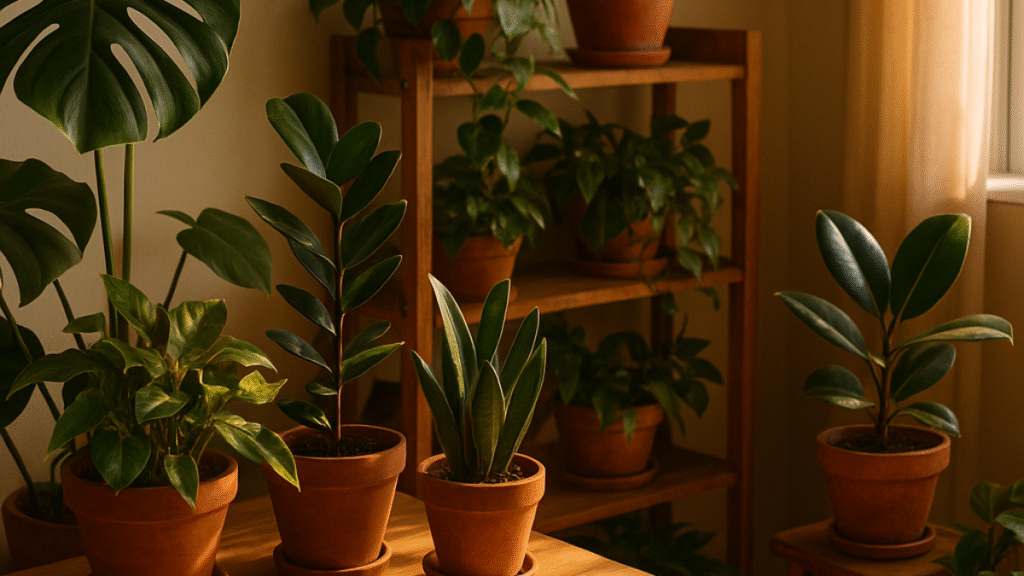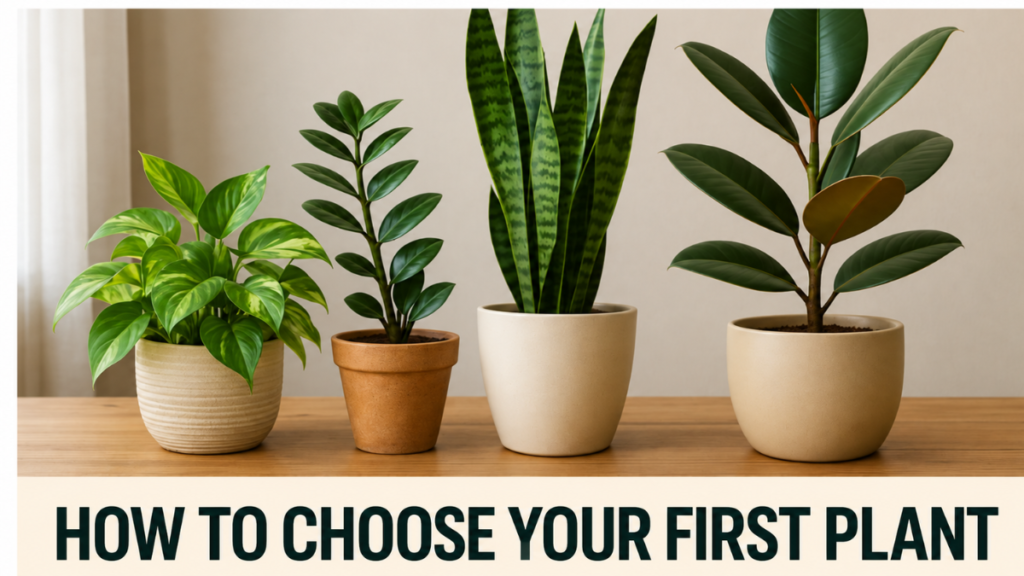
Find out how to choose your first plant if you’re a beginner and want to start without fear. I’ll share real advice, tricks that work, mistakes we all make, and how to find the plant that fits you, your home, and the pace of your life.
Choosing your first plant isn’t just any decision. It isn’t a matter of grabbing something green because it looks nice and calling it a day. There’s an emotional side to it, a bit of excitement, and a small responsibility too, because at the end of the day a living thing is coming into your home.
Why Choosing a Plant Can Matter More Than It Seems
I know it sounds like an exaggeration, but a plant can transform the feel of your home in an almost magical way. Not only visually, though that alone is a great reason, but because of the sensation it creates. A plant brings calm, it makes a space feel more alive, and it reminds you that even in the middle of the daily rush, nature still has a place.
Having a plant forces you, in the loveliest possible way, to slow down a little. It invites you to observe, to listen without hurrying, to understand that everything has its own timing. Plants grow slowly, they change bit by bit, and they show you that not everything has to be immediate. Before you know it, that rhythm rubs off on you.
It also helps you create a cozier atmosphere. Sometimes one simple plant in the right corner completely changes the energy of a room, and you don’t have to be an expert to feel that effect. You just have to let yourself go with it a bit.
That’s why choosing your first plant well matters so much. It isn’t about luck, it’s about understanding what you need and what the plant needs. When that balance clicks, everything flows without effort.
Before You Choose Your First Plant: The Questions That Really Matter
Let me tell you something almost nobody mentions when you’re starting out in this world. This isn’t about memorizing names or becoming a professional gardener. What really matters at the beginning is knowing yourself and knowing your home. Not every plant fits every space or every lifestyle, and that isn’t a bad thing. It’s simply part of the game.
Here are the questions I’d ask you before you pick out your first plant.
How Much Light Do You Really Have
This point is basic, though we often skip right past it. When someone tells me their home has medium light, it almost always means they don’t have that much. Or that they do, but only during one specific stretch of the day. This matters because plants live on light. It’s their main food.
So think about your rooms calmly. Watch how the light comes in during the morning and the afternoon. Notice whether there’s direct sun or only soft brightness. You don’t need to get technical, just honest with yourself. If you struggle to take photos without a flash, you probably have low light. If you can read without turning on a lamp all day long, you have bright light. If the sun pours through one of your windows, that’s direct light.
The clearer you are on this, the better you’ll choose your first plant.
What Kind of Plant Parent Are You
We all think we’ll care for the plant like a treasure, and then real life shows up and, well, you know how it goes. Sometimes we water too much because we think that’s how you spoil them. Other times we forget about them because the week is chaos. That’s fine, it happens to all of us.
What matters is recognizing your tendency. If you’re the kind of person who survives on alarms and lists because things slip your mind, go for a plant that tolerates forgetfulness. If you’re generous by nature and hand out water like candy, pick one that can take it without drama. If you’re someone who enjoys observing and caring at a slow pace, then you have far more options to choose from.
How Much Time Do You Want to Give It
You don’t have to promise me you’ll have hours for it. Just be honest. Some plants ask for almost nothing. You water them once in a while and they go about their business. Others are more delicate and need a more controlled environment.
It isn’t a question of ability, it’s a question of preference. Sometimes we need an easy plant that takes the pressure off. Other times we want a plant that lets us enjoy the ritual of caring for it. Both are perfectly valid.
What Kind of Energy Do You Want It to Bring
I know this sounds a little poetic, but it really does matter. Some plants radiate serenity, others bring freshness, and some fill a room with sheer presence. There are also plants that simply make you smile when you look at them.
Think about the feeling you want when you walk into your home. A plant isn’t only decoration. It’s atmosphere.
The Best Options for Your First Plant Based on Your Light, Your Pace, and Your Personality
Here’s where the fun part starts. Before we get into names, I want to say one thing: there is no single perfect plant. There are plants that fit you at a particular moment. So look at these options like a kind of green horoscope. You don’t have to lock yourself into one, just notice which one calls to you.
If You Have Low Light
If your home isn’t especially bright, don’t worry. That doesn’t mean you can’t have plants. It just means picking the ones that enjoy softer conditions.
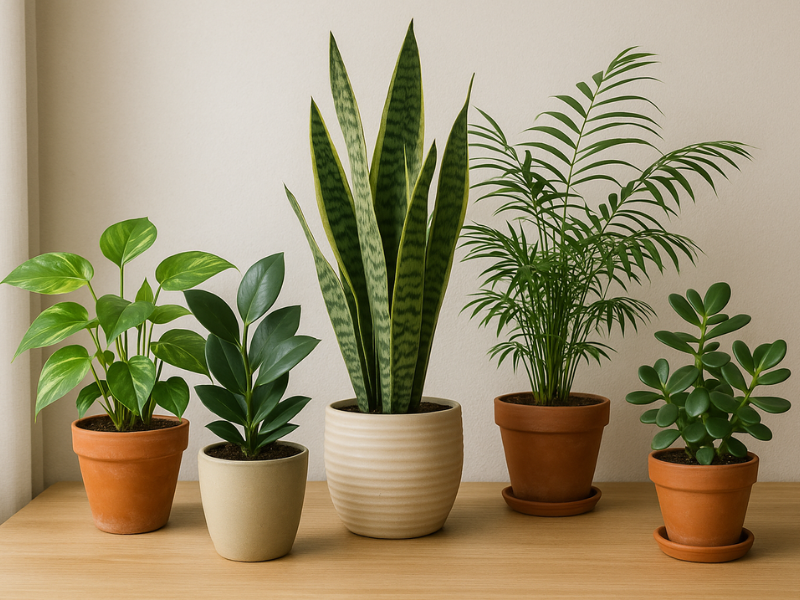
Pothos, for example, is a classic because it puts up with almost anything. It’s forgiving, it grows fast, and it lets you know very gently when it needs water. The ZZ plant is another gem for low light. It grows slowly but always looks perfect. The snake plant is famous for how tough it is and adapts to nearly any situation. The cast iron plant is that grandma plant that has survived generations, because it’s literally built to last.
These plants are ideal if you’re starting from zero, because they don’t demand much and they let you learn without fear.
If You Have Bright Light Without Direct Sun
This opens up a huge range of gorgeous plants. Monsteras become spectacular in this kind of light. Philodendrons are easy, elegant, and grow with a lot of grace. Calatheas are a little more sensitive, but with good light they can become one of your favorites. Dracaenas are also very forgiving and fit into any style.
If your home has that lovely brightness that doesn’t scorch, you have a whole world to choose from.
If You Have Direct Sun
Here you do have to choose carefully, because not every houseplant tolerates it. If you have a window with strong sun, though, you can enjoy cacti, succulents, aloe vera, or a jade plant. These store water in their tissues and love strong light. They also tend to need less watering, so they’re ideal if you have a habit of forgetting the watering can.
The Easiest Plants to Care For: My Personal Top Picks
When people ask me which plant is best to start with, I always say it depends on the home and the person. It’s true, though, that some plants are so good-natured they seem designed specifically for beginners. These let you make mistakes without it turning into a disaster, and the best part is that when they start growing and looking good, your plant-parent confidence goes through the roof.
Pothos, the Universal Pick
Pothos is like that friend who’s always in a good mood and lifts your spirits. It adapts to almost any environment, grows fast, and gives you a lot to look at. What I like best about pothos is that it tells you when it needs something. If it’s short on water, the leaves droop a little. Once you water it, within hours it perks back up as if nothing happened. That gives you a lovely sense of connection, because you feel it responding to your care.
It’s also one of the easiest plants to propagate. Cut a stem, put it in water, and within days you’ll see roots. It’s a wonderful way to share it with friends or to fill your home with several pots without spending more.
The Snake Plant, the Tough One That Never Complains
The snake plant has a very particular personality. I always say it’s the plant that looks at you with an expression of needing absolutely nothing. It’s elegant, strong, and very steady. It handles low light better than most, it can go weeks without water if it has to, and it doesn’t take offense if you neglect it a bit.
It’s perfect for beginners because it lets you learn to observe without the constant fear of doing something wrong. It also adds a vertical, modern touch to any corner, so it looks good even in the spots where you had no idea what to put.
Aloe Vera, Practical and Beautiful
Aloe is one of those plants that doesn’t only decorate, it keeps you company in daily life. Its gel is used to soothe skin, minor burns, and irritation. It feels useful, almost like a natural first aid kit sitting on your windowsill.
It’s also very tough and grows well in sun. If you have a bright window, it can easily become one of your favorites. When it’s happy, it even produces pups you can pot up later. It’s a great choice for a first plant.
Typical Mistakes People Make With Their First Plant and How to Avoid Them
There’s nothing wrong with messing up, honestly. We all have a list of plants that didn’t survive our early attempts. What matters is knowing the most common mistakes so you don’t repeat them unnecessarily.
Thinking That Watering a Lot Means Caring a Lot
This is the number one mistake. We sometimes believe that giving water is a way of showing affection, but for most plants overwatering is genuinely dangerous. Roots need air, and if they stay wet all the time they end up rotting. That rot then spreads to the stems and leaves, and the plant declines without any way back.
The key is watering only when it’s needed. That’s something you learn over time, by watching the soil and how each plant behaves.
Moving the Plant Around Constantly
We sometimes think that by moving it we’ll find the perfect spot, but plants adapt gradually to the conditions they’re in. If you shift them from one place to another every couple of days, you never give them time to settle and they get stressed, odd as that sounds applied to a plant.
The best approach is to pick a spot and leave it there for a while. If you see it isn’t working, then yes, try another one. Slowly, though.
Using a Pot Without a Drainage Hole
I know there are adorable pots out there that make you want to buy them on the spot, but if they have no hole at the bottom, the roots end up trapped in water, and sooner or later that turns into a problem.
You can use them as decorative outer pots by placing a nursery pot with a hole inside. That way you get the look and a healthy plant at the same time.
Ignoring the Real Light in Your Home
Light isn’t a minor detail, it’s the foundation of a plant’s life. Not every plant can live just anywhere. That’s why it’s so important to study your home before choosing your first plant.
A plant that needs direct sun won’t survive in a windowless hallway, no matter how much you adore it. A plant that prefers shade will scorch if you put it in a summer window. It isn’t that you’re doing something wrong, it’s that each species has its own needs.
How to Read Your Plant’s Signals: Yes, They Talk, Just in Leaf Language
At first, right after you bring your first plant home, the messages take a bit of decoding. Once you learn to watch for them, though, it becomes almost automatic. Plants are expressing themselves all the time, and even without making noise, they say a lot.
Yellow Leaves
When a leaf turns yellow it can be pointing to several things. Sometimes it’s too much water, because the roots can’t breathe. Other times it’s not enough light. Other times it’s simply an old leaf the plant no longer needs and decides to drop. In these cases it’s important to look at the overall pattern. If only the occasional leaf falls, that’s usually normal. If a lot of leaves yellow at once, something is going on.
Limp Leaves
This signal is usually clear: not enough water. The plant lowers its leaves as if it were tired. Once you water it, it recovers fast. It’s one of the easiest signals to understand, because the response is immediate.
Brown Tips
This usually comes down to low humidity in the room. Many tropical plants struggle with strong heating or very dry air. If you see dry tips, you can raise the humidity by grouping plants together, using a humidifier, or misting lightly.
Dark Spots
If you see spots that look like water burns, it may be overwatering or a fungus. In those cases it’s best to let the plant dry out well before watering again, and to improve airflow.
Slow Growth
If your plant hasn’t budged in months, it may need more light or a little fertilizer. Keep in mind that not all plants grow at the same pace and that winter is usually a resting season.
Which Pot to Choose: A Detail That Matters Far More Than We Think
Choosing a pot isn’t only about looks. The pot determines how the plant breathes, how the water drains, and how the roots develop. Getting it right saves you a lot of grief.
The Importance of the Drainage Hole
This one is essential. Without a hole, water pools at the bottom and the roots sit submerged. Over time they deteriorate and the problems begin. Even if you fall in love with a pot that has no hole, use it only as an outer container. Put a proper nursery pot inside and everything will be fine.
Terracotta or Plastic
Terracotta pots let the soil breathe and the water evaporate faster. They’re ideal if you tend to overwater. Plastic ones hold moisture longer and weigh less. They work really well for people who forget to water, or for plants that need constant moisture.
The Right Size
If the pot is too big, the soil takes too long to dry and that causes moisture problems. If it’s too small, the roots run out of room. The ideal is to repot only when it’s truly necessary. An inch or two more in diameter is usually enough in most cases.
Potting Mix for Beginners: The Right Soil Changes Everything
Good potting mix is like a good mattress. If the plant is comfortable, it grows better. If it isn’t, it suffers without you noticing.
All-Purpose Mix
This is the base for most houseplants. Make sure it’s light, airy, and doesn’t compact too much. A quality mix makes a real difference, even if you add nothing else to it.
Improving the Blend
Adding perlite helps aerate the soil and prevents waterlogging. Coco coir holds moisture in a balanced way without turning dense. Worm castings add nutrients naturally. Mix a little of each into an all-purpose mix and you’ll have great soil to start with. Good care is the next step after choosing your first plant.
Watering Starts With the Soil
The quality of the mix determines how water behaves. Soil that’s too compact holds moisture and causes problems. Well-blended soil lets the water flow through and lets the plant breathe better.
Watering: Everyone’s Big Fear and How to Get Over It
Watering seems simple, but it’s where the most questions come up. That’s normal, because every plant is its own world and every home has its own climate.
The Finger Test
This method never fails. Stick a finger into the soil up to the middle knuckle. If the soil is damp, wait. If it’s dry or nearly dry, water. If it’s soaked, give it more days. It’s simple and it always works.
How Much to Water
The ideal is to water until it runs out the bottom. That guarantees the whole root ball has been moistened. Then empty the saucer if water is left standing. That’s how you avoid root problems.
How Often to Water
There’s no exact answer, because it depends on the light, the size of the pot, the type of plant, and the season. In summer plants usually need more water. In winter, far less.
Rainwater
It’s the best thing you can give them, since it has no lime or chlorine. If you don’t have any, tap water that’s been left to sit works fine. Don’t make it more complicated than it needs to be.
How to Place Your Plants So They Actually Thrive and Look Good
Placement largely defines a plant’s health. Sometimes moving it just a little is what finds the perfect spot.
Avoid Direct Sun if Your Plant Can’t Take It
Many tropical plants burn in strong sun. If you notice brown or yellowish patches on the leaves, they may need a gentler corner.
Watch Out for Drafts
Air from the AC or cold drafts affect plants more than we imagine. If a plant seems off for no obvious reason, check whether it’s sitting in a draft.
Create Green Corners
Grouping plants doesn’t only look beautiful, it also creates a more humid, pleasant environment for them. They help each other out and you get a corner full of life.
When to Repot Your First Plant and How to Do It Without Fear
Repotting is scary at first, but it isn’t as complicated as it seems if you take it slowly.
When It’s Time
Spring and summer are when plants have the most energy. If you see roots coming out the bottom, badly degraded soil, or a plant that has stalled, it probably needs a change.
How to Repot
Ease the plant carefully out of its pot. If the roots are tightly packed, massage them a bit to loosen them. Put a layer of fresh mix in the new pot, center the plant, and fill in around it. Then water lightly and leave it somewhere with soft light for a few days.
Common Beginner Problems and How to Solve Them Without Drama
Fungus Gnats
These usually show up when the soil stays damp all the time. Let it dry out a bit between waterings and add a thin layer of sand on the surface. It works like a charm.
Leaves That Won’t Unfurl
It can be low light or low humidity. Sometimes it’s enough to move the plant closer to a brighter window or place it near other plants.
Lopsided Growth
The plant is reaching for the light. Give it a quarter turn every week so it grows evenly.
Nobody Starts Out Knowing How to Care for Plants
It doesn’t matter how many perfect photos you see on social media. We’ve all had a plant slip away without understanding why. We’ve all watered with love thinking we were doing the right thing, and it turned out to be too much. We’ve all put a plant wherever it looked best and then wondered why it seemed worse every day.
Over time I’ve found that caring for plants isn’t a matter of technique, it’s a matter of presence. Of paying attention. Of noticing small details without obsessing over them. Of understanding that each plant has its own way of growing and that forcing it gets you nowhere. Then, all of a sudden, they start growing, pushing out new leaves, making a place for themselves in your home as if they’d always been there.
How to Build a Green Routine That Keeps Your Plants Happy Without Stressing You Out
Plants don’t need you hovering over them all day. They don’t require hours of care either. What suits them best is a simple, steady, calm routine. The kind that doesn’t weigh on you and that you fold into your day without noticing.
Once a Week
Spend a few minutes just looking at them, no more time than that. Check whether the leaves are firm, whether any have yellowed, whether the soil is dry or damp. Turn the plant a little so the light reaches it evenly. This simple habit alone makes your plants grow more symmetrical and healthy.
Once a Month
This is the moment for small extras. Wipe the leaves with a damp cloth to remove the dust that builds up. You’ll be surprised how different they look afterward. You can also add a little fertilizer if the plant is in its growing season. Check whether the pot has gotten too small or roots are showing, and if so, think about repotting.
Every Change of Season
Plants respond a lot to changes in the weather. In spring and summer they have more energy. In fall and winter they slow down. If you adapt your care to those rhythms, the plant will thank you for it.
In spring it’s a good idea to water a bit more and start feeding. In summer, watch that they don’t burn in the sun and that the heat doesn’t dehydrate them. In fall, start cutting back on water. In winter, give them plenty of light, because they need it to keep from stalling.
| Frequency | What to Do | Key Purpose |
|---|---|---|
| Once a Week | Check if leaves are firm or yellowing, feel whether the soil is dry or damp, and rotate the plant slightly. | Spot problems early and help the plant grow evenly. |
| Once a Month | Wipe leaves with a damp cloth, add fertilizer during the growing season, and check if the pot is too small or roots are showing. | Keep the plant clean, nourished, and properly potted. |
| Spring | Water a little more and start fertilizing. | Support active growth. |
| Summer | Protect from strong sun and prevent dehydration from heat. | Avoid sunburn and water stress. |
| Fall | Gradually reduce watering. | Adjust to slower growth. |
| Winter | Give the plant as much light as possible and reduce watering. | Help it stay healthy during its slower season. |
What I’d Recommend for Your First Plant Based on Your Personality
It sounds silly, but I promise personality has a lot to do with your relationship with plants. Not because some people are better than others, but because each of us has a lifestyle and a way of caring for things.
If You’re Restless, Creative, and Love Seeing Constant Change
Monstera deliciosa is perfect for you. It grows fast, pushes out new leaves all the time, and turns any corner into something vibrant. Pothos suits you too, because it grows nonstop and adapts to any height or shape.
If You’re Practical, Organized, and Need Something That Takes No Mental Effort
The snake plant is your match. It respects your time, demands nothing, and always looks dignified. The ZZ plant works too, because it needs almost no care and stays firm and elegant.
If You Love Details, You’re Sensitive, and Aesthetics Draw You In
Calatheas and prayer plants have that artistic quality you’ll surely fall for. Their natural markings, their colors, and their movement are pure plant poetry. They need a little more attention, though not as much as people sometimes claim.
If You’re Calm, Spiritual, or Looking for Harmony
Aloe vera and the jade plant are wonderful. They have a serene energy, they grow slowly, and they radiate stability. They’re also easy to care for and handle change without trouble. Both are great choices for a first plant.
If You’re Forgetful, Have a Thousand Things on Your Mind, or Struggle With Routines
Cacti and succulents are your best allies. They’re pretty, minimalist, and they forgive almost any lapse. All they need is light and the occasional watering.
Advanced but Easy Tricks to Take Your Care Further
Once you’ve chosen your first plant, there’s no need to overcomplicate things. These small tricks can level up your care with no extra effort.
Group Plants to Create a Microclimate
When you put several plants together, humidity rises naturally. They shelter each other and the environment becomes more stable. It also looks beautiful and turns any corner into a cozy spot.
Give Them a Light Shower Now and Then
A quick rinse with lukewarm water helps clear off dust, hydrate the leaves, and improve their overall look. Avoid doing it in winter if the house is cold, though, since they can suffer for it.
Prune to Rejuvenate
If you see very old or damaged leaves, take them off. The plant will put that energy into new shoots. It’s like giving it a gentle reset that revives it.
Propagate Your Plants
Once you start taking cuttings and watching roots appear, you’re hooked. You feel almost like an alchemist. It’s also a lovely way to share plants with friends or build a little garden without spending more.
What Nobody Tells You: Losing Plants Is Normal and Doesn’t Mean You’re Doing It Wrong
This part matters. We sometimes think caring for plants is a straight line. You start, you learn, and none of them ever die again. Reality works differently. Sometimes you’ll buy a plant that was already weak. Other times the light will change and you won’t notice. Or it will simply be in a phase that doesn’t fit your space.
Losing plants is part of the road. It isn’t a failure, and it certainly doesn’t define your ability to care for them. The beautiful thing is to keep trying, keep learning, and above all keep enjoying the ones that do grow with you.
Every plant that passes through your hands teaches you something. It helps you observe better, it makes you more patient, it invites you to live alongside something natural in a way books can’t teach. That alone is a gift.
Frequently Asked Questions About Choosing Your First Plant
What’s the best plant to start with if I have no experience?
If this is your first plant and you have no previous experience, the best move is to start with something tough and undemanding. Pothos, snake plant, or ZZ plant are perfect options because they adapt to different light levels, they don’t need constant watering, and they usually warn you well in advance when something is off. Starting with an easy plant helps you build confidence and enjoy the process without fear.
How often do I have to water my first plant?
There’s no exact schedule that works for every plant. Watering depends on the species, the size of the pot, the time of year, and the light it gets. As a general rule, it’s better to give too little than too much. Before watering, touch the soil with your finger. If it’s dry, go ahead. If it’s still damp, wait a few more days. This simple habit prevents most problems.
What if my first plant dies?
The same thing that has happened to all of us. A plant dying doesn’t mean you’re not cut out for this. It’s part of learning. Sometimes the plant was already weak, sometimes it didn’t suit your home, or it simply needed different care. Instead of getting frustrated, try to work out what might have happened and try again with something tougher.
Is it better to start with small or large plants?
For beginners it’s usually easier to start with small or medium plants. They’re more manageable, they adapt better to changes, and it’s easier to spot when something is wrong. Very large plants can feel intimidating and need a bit more attention to watering and placement.
Can I put my plant in any room of the house?
Not every room is the same for a plant. Before placing it, look at the natural light that space gets and whether there are drafts or sudden temperature changes. Kitchens and bathrooms can be good spots for some plants thanks to the humidity, while hallways or very dark rooms call for species adapted to low light.
Do I need fertilizer from the start?
There’s no need to fertilize a plant you’ve just bought. The potting mix usually comes with enough nutrients for the first few months. It’s better to let the plant settle into its new home and start feeding only once it’s stable, usually in spring or summer and always gently.
Which pot is best for my first plant?
The most important thing is that the pot has a drainage hole. The material depends on your habits. If you tend to overwater, terracotta helps the soil dry out faster. If you tend to forget, plastic holds moisture better. The pot shouldn’t be too big, just slightly larger than the plant’s root ball.
How do I know if my plant is getting too much or too little light?
If the plant grows very slowly, stretches toward the light, or loses color, it probably needs more light. If brown patches or scorched leaves appear, it may be getting too much direct sun. Watching how the plant responds over the first few weeks will tell you a lot.
Is it normal for my plant to drop a leaf when I bring it home?
Yes, completely normal. Plants usually go through an adjustment period when their environment changes. Yours may drop a leaf or look a little dull at first. Give it time, don’t keep moving it around, and stick to the basics. It should settle within a few weeks.
When should I repot my first plant?
There’s no need to repot as soon as you get home. It’s better to wait until the plant has settled in. Repotting is usually needed when roots come out of the drainage hole, the soil dries out very fast, or the plant stops growing. The best season for it is spring.
How many plants should I have at the start?
Less is more. Start with one or two. That way you can watch them, learn their rhythm, and avoid feeling overwhelmed. Once you feel comfortable, you can expand your green corner little by little.
Choosing Your First Plant Is the Start of a Small Personal Journey
Choosing your first plant is like opening a door to a different way of being in your own home. It doesn’t matter if you don’t know much. It doesn’t matter if it scares you. The only thing that matters is curiosity and the desire to begin.
A plant keeps you company in a very particular way. Its leaves shift with the light, it grows alongside you, it adapts to your space, and it reminds you that even things that seem small can bring calm and beauty. You won’t do it perfectly, and you don’t need to. Plants aren’t after perfection. They’re after attention, quiet affection, and a place where they feel good.
So go ahead. Pick out your first plant and put it in a corner you love. Look at it every so often, and you’ll find that little by little it connects you with something simple and very much your own.
I want to hear which plant is on your mind. Which corner of your home is asking for a little green. What questions you have, or what you’re excited about. I’d love to read you, help you choose, or keep you company on this first adventure.
If this post helped you, share it with that friend who says even her cacti die on her. She might be one plant away from discovering something wonderful.