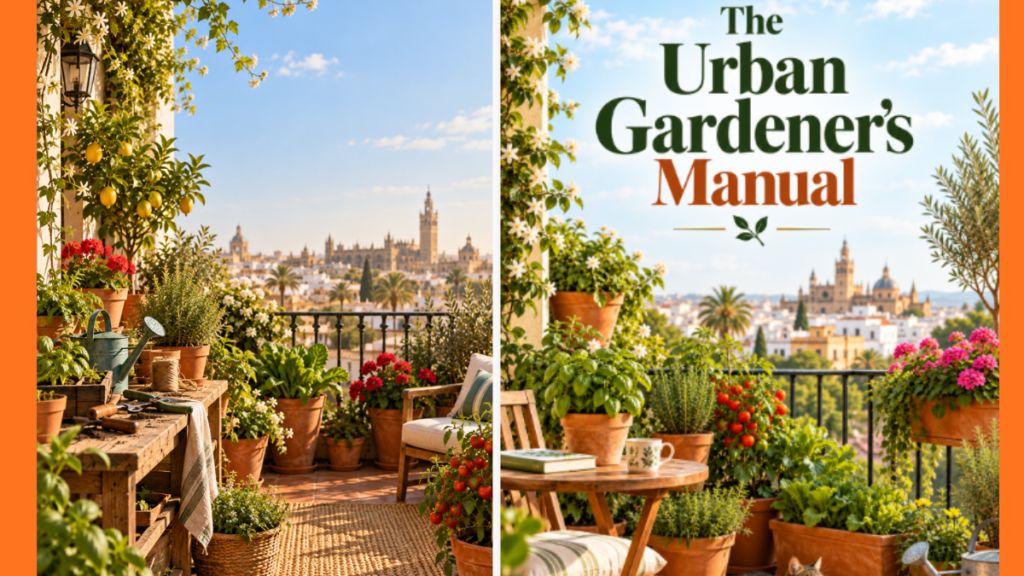
Discover The Urban Gardener’s Manual, available on Amazon. Learn how to prepare potting mixes, make natural fertilizers, fight pests, and take care of your plants.
Having plants at home is so much more than a decorating choice. It’s the joy of watching a new leaf unfold, realizing that the plant you thought was a goner is sprouting again, or picking the first tomatoes you grew on your own balcony. But anyone who’s gotten into gardening knows it’s not always as easy as it looks.
Why are the leaves turning yellow? What potting mix does each plant need? Is it actually good to use coffee grounds as fertilizer? Do homemade pest remedies really work? How can we keep our plants healthy without spending a fortune on products?
Those are some of the questions that inspired The Urban Gardener’s Manual, the book from My Green Balcony that’s now available on Amazon.
A practical guide designed to help you better understand your plants, learn how to take care of them, and discover that you don’t need a big yard or advanced botany knowledge to enjoy a space full of life.
This post contains affiliate links. Please see the disclosure.
A book born from experience and a love for plants
It all started on a balcony barely forty square feet across, surrounded by pots of different sizes, improvised soil mixes, and plants that didn’t always survive the care they received.
At first, it seemed like all you had to do was buy a pretty plant, stick it in a pot, and water it every now and then. But it wasn’t long before the first doubts, the mistakes, and the need to understand what was actually going on started piling up.
That curiosity about why some plants thrived while others got sick was the starting point for My Green Balcony. What began as a way to learn from our own mistakes eventually turned into a project dedicated to sharing knowledge, experiences, and practical solutions for home gardening.
That journey is where The Urban Gardener’s Manual comes from, a book created for beginners and experienced plant parents alike who want to take their skills to the next level.
The secret to healthy plants starts below the surface
One of the most important aspects of gardening is also one of the most overlooked. The potting mix.
We’ll spend time picking out a beautiful pot, finding the perfect spot in the house, or buying fertilizers, without stopping to think about the soil where the roots are actually going to grow. But the wrong potting mix can lead to growth problems, excess moisture, lack of oxygen, and disease.
Not all plants need the same conditions. You can’t grow a cactus the same way you grow a calathea, just like a tomato plant has very different needs from lavender.
That’s why a major part of the book is dedicated to explaining how potting mixes work and how to prepare custom blends for different types of plants.
Throughout its pages, you’ll find ten potting mix recipes with their ingredients and proportions, designed for leafy vegetables, tomatoes and peppers, carrots and radishes, herbs, heavy-blooming flowers, acid-loving plants, bulbs, tropical plants, cacti, succulents, and orchids.
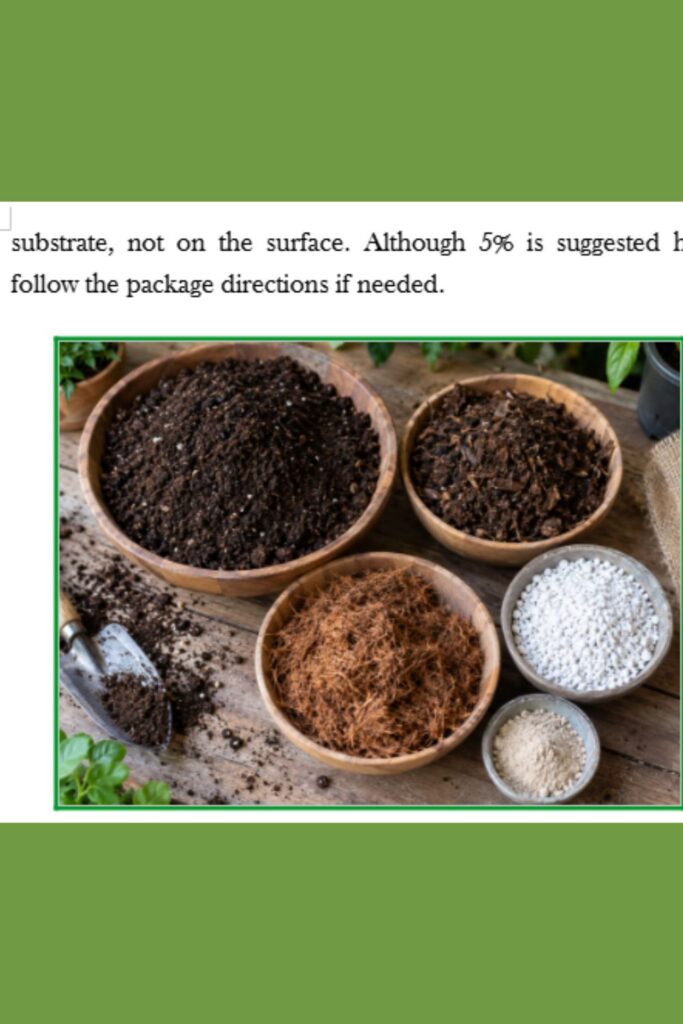
You’ll also learn what role materials like coco coir, perlite, vermiculite, pumice, and pine bark play, and why finding the right balance between aeration, moisture retention, and drainage is so important.
Natural fertilizers and making the most of what you already have at home
Gardening can also change the way we look at the waste we produce every day.
Our kitchens are full of materials that can be put to use in plant care, as long as we know how to use them and understand their limitations.
The Urban Gardener’s Manual includes a section on plant nutrition and different homemade preparations, explaining their ingredients, how to make them, and how to apply them.
Among the recipes you’ll find are fermented banana peel tea, ways to use rice water and bean cooking water, nettle fertilizer, and several other preparations traditionally used in home gardening.
The book also tackles some of the most widespread myths, like using coffee grounds to acidify soil or the idea that eggshells provide calcium right away.
Because taking care of your plants sustainably isn’t as simple as tossing any organic scraps into a pot. It’s important to understand how different materials work, when they can be useful, and what precautions to take so you don’t end up doing more harm than good.
Learn to spot problems before it’s too late
Yellow leaves, spots, weak stems, or stunted growth are signals that can have very different causes. Sometimes the issue is related to watering. Other times it’s about lighting, nutrient deficiencies, or the arrival of pests and diseases.
The Urban Gardener’s Manual includes chapters dedicated to identifying common problems and exploring different ways to deal with them.
Its pages cover some of the most common pests, like aphids, mealybugs, and spider mites, as well as fungal diseases and preventive measures.
You’ll also find information on preparations like insecticidal soap, garlic-based sprays, and other home remedies, with instructions for making and using them.
One of the most interesting sections is called the Lazarus Protocol, dedicated to those moments when a plant seems like it’s on its last legs and you need to figure out what’s going on before you can try to save it.
The goal is to help you observe, identify possible causes, and make informed decisions instead of applying treatments without knowing what the actual problem is.
Way more than potting mixes and home remedies
While the recipes take up a significant part of the book, The Urban Gardener’s Manual goes well beyond that. Across its seven sections, it covers a wide range of topics related to growing and maintaining plants, from the fundamentals of gardening to tips on designing and organizing green spaces.
You’ll learn to better understand watering, start seeds, propagate plants using different techniques, and make the most of organic waste through composting.
It also covers topics like companion planting, fertilization, macronutrients, mycorrhizae, and how to make the most of small spaces for growing.
Because you don’t need a big plot of land to enjoy gardening. A patio, a balcony, or even a windowsill can become a growing space if you choose the right plants and understand their needs.
The book also includes a section on indoor garden design and botanical style, with ideas for incorporating plants into your home and arranging them in a way that considers both aesthetics and their light and space requirements.
On top of that, there’s an urban gardener’s calendar designed to help you understand the tasks that are best done during each season of the year.
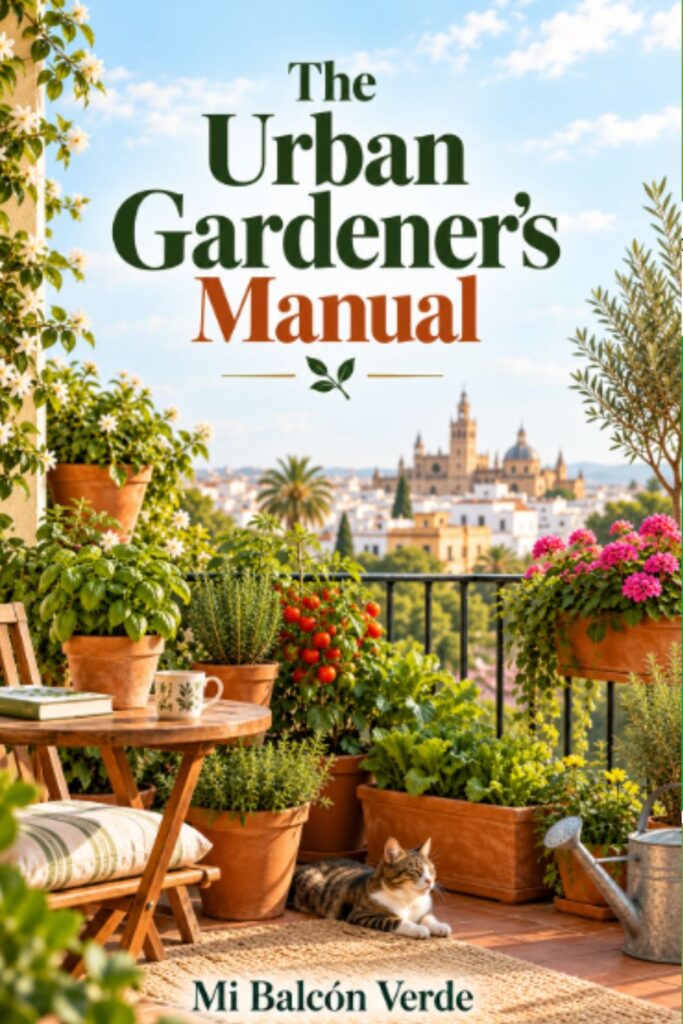
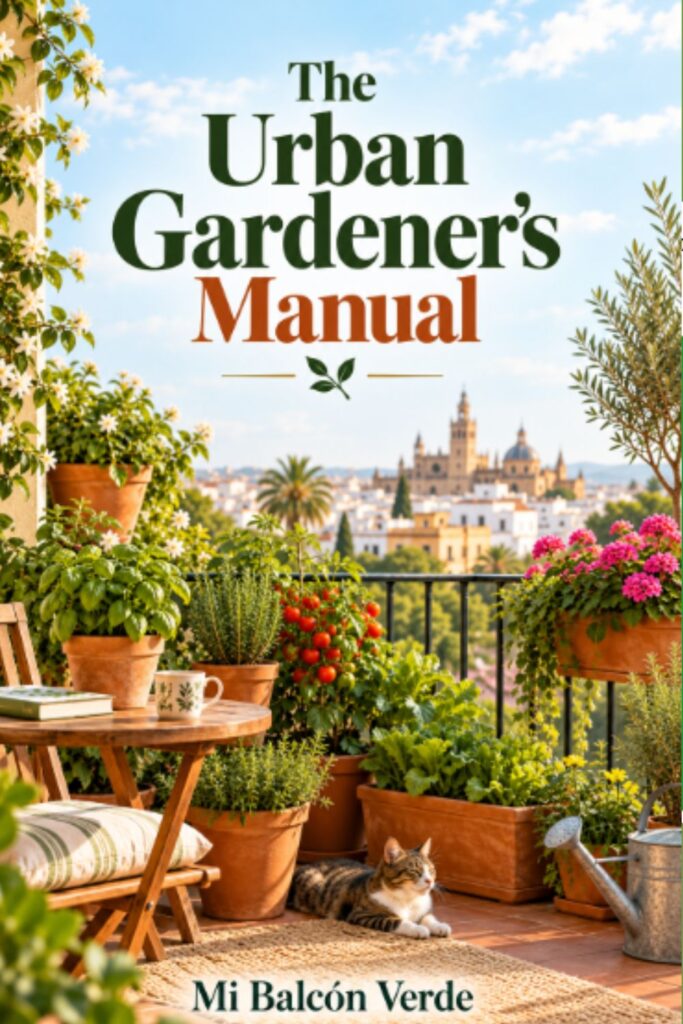
Book cover
Mistakes are part of the learning process
If you’ve ever overwatered a plant, put it somewhere with too little light, or used the wrong potting mix, you’re definitely not the only one.
In fact, a lot of what we learn in gardening comes precisely from making mistakes. That’s why the book dedicates one of its sections to analyzing the most common slip-ups and the solutions we can apply to avoid them.
The goal isn’t to make sure no plant ever dies again, because no gardener can guarantee that. It’s about learning to read what your plants are telling you and gradually improving the way you care for them.
With experience, you start to realize that more water doesn’t mean better care, that fertilizer doesn’t fix everything, and that every species has its own growth rhythm.
Gardening is a never-ending learning process, and having well-organized, accessible information can make that journey a whole lot smoother.
A guide you can come back to whenever you need it
The Urban Gardener’s Manual isn’t meant to be read from cover to cover and then forgotten on a shelf.
Its structure makes it easy to go back and look up specific chapters whenever a question comes up, whether you need to prepare a potting mix, want to try a propagation technique, or are looking for information about a problem that’s affecting your plants.
In addition to the main chapters, it includes quick-reference appendices, a list of materials used in gardening, a growing journal, frequently asked questions, and sections dedicated to propagation and composting.
All of this makes the book a reliable companion through every stage of your journey as an urban gardener. Whether you just bought your first plants or you’ve been growing in containers for years, you’ll find knowledge that can help you better understand what’s happening in your little green space.
Gardening is also a form of wellness
Beyond the technical side of plant care, growing plants gives us something especially valuable. The chance to unplug from the rush of everyday life for a little while.
Watching a plant grow, starting seeds, or spending a few minutes checking on your pots are all activities that invite us to pay attention to the present moment. The book actually begins by exploring that connection between gardening and well-being, and how being around plants can become part of a calmer, more mindful routine.
In an urban environment, where we’re often surrounded by buildings, screens, and noise, having a small green corner can become a simple way to reconnect with nature.
The Urban Gardener’s Manual is now available on Amazon
After gathering experiences, organizing knowledge, and developing the recipes and explanations that make up this guide, The Urban Gardener’s Manual is now available for anyone who wants to keep learning about plant care.
With the subtitle “Potting Mixes, Home Remedies, and Everything Your Plants Need You to Know,” the book brings together practical information on home gardening, plant nutrition, propagation, problem prevention, potting mix preparation, and green space design, all in one volume.
It’s a great read for anyone who loves being surrounded by plants, wants to start their first urban garden, or is trying to figure out why their pots don’t always cooperate the way they’d hoped.
It also makes a perfect gift for that person who always comes home with a new plant, who loves rooting cuttings, or who dreams of turning their balcony into a little garden.
You can find The Urban Gardener’s Manual, from My Green Balcony, on Amazon.